
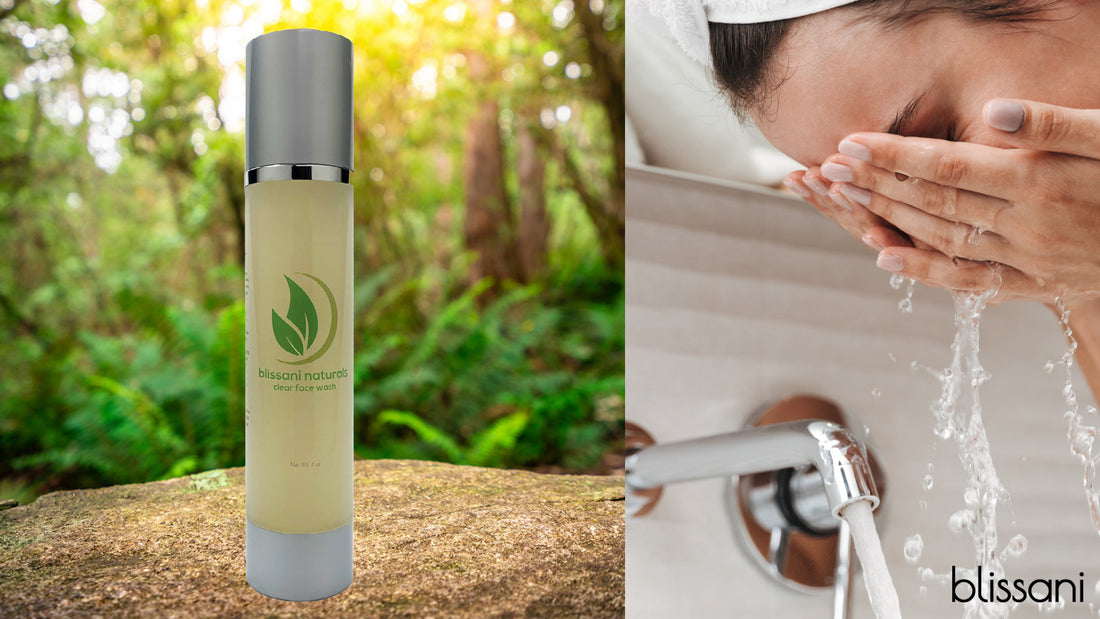
Unlock Glowing Skin with blissani's Natural Face Wash
Share
What Makes a Natural Face Wash Actually Worth Using?
Most commercial face washes clean your skin by stripping it — detergents like sodium lauryl sulfate remove dirt and oil, but they also disrupt your skin's natural moisture barrier. That leaves skin tight, dry, and sometimes more prone to breakouts as oil glands overcompensate. A well-formulated natural face wash takes a different approach: ingredients derived from plants cleanse without that aggressive stripping effect, which matters especially if you have sensitive, acne-prone, or combination skin.
The catch is that "natural" on a label means almost nothing without looking at what's actually in the bottle. So let's talk about what's in ours and why each ingredient earns its place.
The Key Ingredients in blissani's Clear Face Wash
The blissani Naturals Clear Face Wash is built around four plant-based actives that each do specific, documented work on your skin.
Rosehip Seed Oil is pressed from the seeds of Rosa canina fruit and is naturally high in linoleic acid (omega-6) and trans-retinoic acid, a precursor to vitamin A. Linoleic acid helps reinforce the skin barrier and has been shown in studies to reduce microcomedone formation — those tiny clogged pores that eventually become visible acne. Skin that's acne-prone tends to be deficient in linoleic acid, so replenishing it is a practical, targeted move rather than a generic "nourishing" claim.
Red Clover Extract contains isoflavones, plant compounds that interact with estrogen receptors in skin tissue. This activity has been linked to improved skin elasticity and a reduction in the appearance of fine lines, which makes it a useful addition even in a rinse-off product where some actives do absorb before you towel off.
Aloe Leaf Juice Extract provides polysaccharides that form a light film on skin, holding moisture in place during and after cleansing. It also carries well-studied anti-inflammatory properties — relevant if you're dealing with redness, irritation, or active breakouts that you don't want to aggravate during your cleansing step.
Marigold (Calendula) Extract rounds out the formula with flavonoids and triterpenoids that calm inflammation and support tissue repair. Calendula has been used in wound care for decades, and its application here makes sense for anyone whose skin tends to look angry or reactive after washing.
Is This Face Wash Good for Acne-Prone Skin?
Yes — and here's the specific reason why. Many acne-focused face washes lean on salicylic acid or benzoyl peroxide as their primary active. Those ingredients work, but they can be drying and irritating, particularly with daily use. The blissani Clear Face Wash takes a gentler path: the linoleic acid from rosehip seed oil addresses one of the underlying conditions that makes skin acne-prone, while aloe and calendula keep inflammation in check without drying out the rest of your face.
This makes it a strong option for people who've tried harsher acne cleansers and found their skin red, flaking, or somehow breaking out more. It's also a good daily cleanser to pair alongside a targeted spot treatment — blissani's Clear Spot Solution ($16) is formulated for that exact role if you want to keep actives concentrated on problem areas rather than applying them all over.
Who Should Use a Vegan, Cruelty-Free Face Wash?
The short answer: anyone who cares about what goes on their skin and where it comes from. Vegan skincare skips animal-derived ingredients like lanolin (from sheep's wool), collagen (typically from bovine or marine sources), and certain emulsifiers derived from animal fats. Cruelty-free means no animal testing at any stage of production.
Beyond ethics, there are practical skin reasons too. Animal-derived ingredients like lanolin can be comedogenic for some people — meaning they contribute to clogged pores. Plant-based alternatives tend to be lighter and less likely to cause that issue. blissani products are formulated, manufactured, and packaged in the United States, which also means tighter oversight on ingredient sourcing and production standards than many imported alternatives.
How to Get the Most Out of Your Cleansing Routine
Using a good face wash the wrong way limits its effectiveness. A few things that actually make a difference:
Water temperature: Lukewarm is better than hot. Hot water feels satisfying but accelerates moisture loss and can trigger redness in sensitive skin types.
Time on skin: Give the cleanser 30–60 seconds of contact time before rinsing. Most people splash and rinse in under 15 seconds, which doesn't give the actives much chance to do anything.
Frequency: Twice daily — morning and evening — is the standard recommendation. If your skin is very dry or reactive, once daily in the evening (to remove sunscreen, makeup, and the day's buildup) can be enough, with a plain water rinse in the morning.
What comes after: Cleansing opens the door for what follows. A toner applied while skin is still slightly damp, followed by a serum and moisturizer, absorbs better than layering products onto fully dry skin.
Spring Skincare: Why the Season Matters for Your Cleanser
As humidity rises in spring and your skin shifts from winter's dry conditions, oil production often increases. That seasonal change can trigger breakouts even in people who don't normally deal with acne. Switching to a cleanser that balances oil without over-drying — like one built around rosehip seed oil and aloe — is a reasonable seasonal adjustment. You're not fighting oil by stripping everything; you're keeping the skin environment balanced so it doesn't overcorrect.
Spring is also the time to revisit SPF habits as sun exposure increases. A good cleanser in the evening ensures you're fully removing sunscreen rather than letting residue accumulate in pores overnight.
If you want a straightforward upgrade to your daily routine, start with the cleanser — it's the foundation everything else sits on. The blissani Naturals Clear Face Wash at $18 is a practical starting point: vegan, cruelty-free, made in the US, and formulated with ingredients that have real mechanisms behind them — not just a list of plant names chosen for marketing appeal.
Frequently Asked Questions
Common questions about this topic
Will blissani's Natural Face Wash still clean my skin effectively without sulfates like sodium lauryl sulfate?
Yes, blissani's plant-based formulation cleanses effectively without stripping your skin's moisture barrier the way sulfates do. The natural ingredients remove dirt and oil gently, which is especially important for sensitive or acne-prone skin that can become more oily when over-stripped by harsh detergents.
Is rosehip seed oil in a face wash going to make my skin feel greasy?
No—rosehip seed oil in blissani's formula is included specifically for its linoleic acid content, which reinforces your skin barrier rather than leaving a heavy residue. The formulation is balanced to cleanse without that tight, dry feeling you get from conventional washes, while still maintaining a lightweight finish.
What's the difference between blissani's natural approach and other "natural" face washes I see at the store?
Most products labeled "natural" don't specify their actual ingredients or their documented benefits, making it impossible to know if they're truly effective. blissani's Clear Face Wash is built around four plant-based actives with specific, studied functions—like rosehip seed oil's proven ability to reduce microcomedone formation—so you know exactly what you're getting and why it works.