
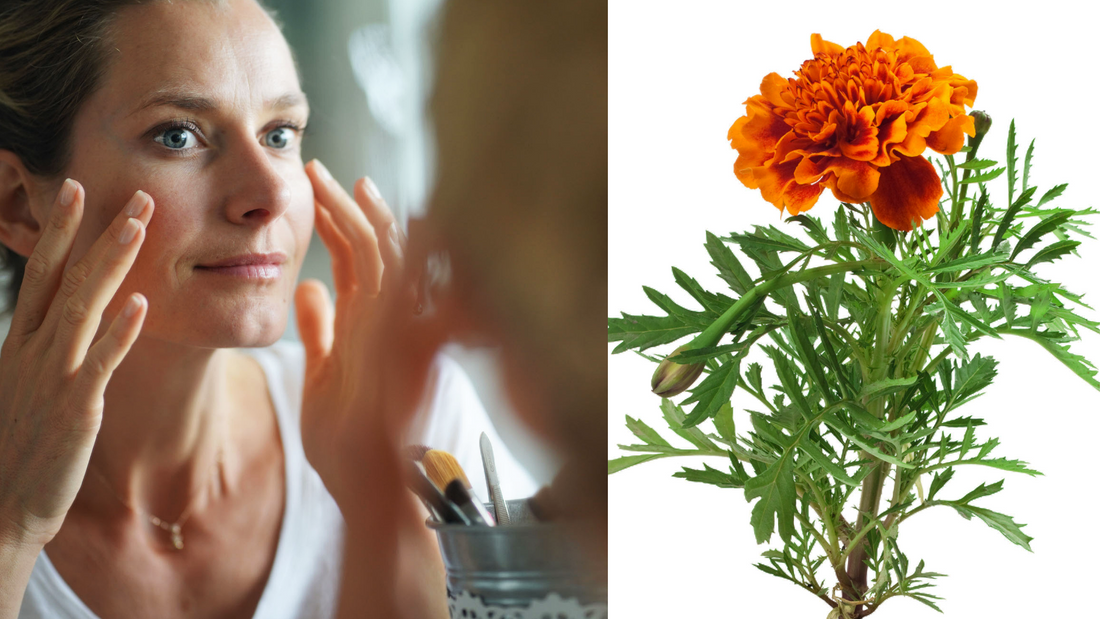
Marigold Extract for Skin: Anti-Aging, Acne & Healing Benefits
Share
The Marigold Story
There is something almost magical about a marigold. Growing up, they lined the edges of my grandmother's garden in vivid rows of amber and gold — cheerful, stubborn little flowers that bloomed from late spring clear through the first frost. She called them her "workhorses," and she wasn't wrong. They kept the aphids off the tomatoes, they brightened every corner they occupied, and on warm afternoons, they filled the whole backyard with that unmistakable scent: earthy, slightly resinous, green in a way that felt ancient and alive all at once.
I remember picking them as a kid and coming away with sticky yellow pollen on my fingertips. Nobody told me then that those same sticky, golden petals had been soothing human skin for thousands of years. It wasn't until much later — reading about botanical ingredients and the quiet renaissance of plant-based skincare — that I connected the dots between my grandmother's garden beds and the ingredient label on a truly excellent face wash. Once I made that connection, I couldn't un-make it. Marigold extract, or calendula, became one of those ingredients I look for the way a good cook looks for quality olive oil: it signals that someone actually cares about what they're putting in the bottle.
That discovery is exactly what this article is about. Whether you're new to calendula or you've been a botanical skincare devotee for years, the science behind this humble flower is worth celebrating.
What Is Marigold Extract?
Marigold extract comes from Calendula officinalis, a species of flowering plant in the daisy family (Asteraceae) native to the Mediterranean region. The word calendula is thought to derive from the Latin calendae — meaning the first day of the month — because the plant blooms so reliably and for so long. Ancient Egyptians valued it for rejuvenating the skin. Greek, Roman, and Arabic herbalists documented its medicinal uses. By the Middle Ages, calendula was a staple of European apothecaries, used for everything from wound care to digestive complaints.
To make calendula extract, the dried or fresh petals of the flower are typically macerated in a carrier oil or solvent — often a gentle alcohol-and-water solution or a nourishing plant oil like sunflower or jojoba — allowing the fat-soluble and water-soluble active compounds to infuse over days or weeks. The result is a concentrated liquid rich in flavonoids, carotenoids, triterpenoids, polyphenols, and essential oils. These compounds are the reason calendula does so much, and why formulators reach for it when they want real botanical performance in a product.
Anti-Inflammatory and Healing Properties
If you had to choose one word to describe calendula's superpower, soothing would be a strong candidate. The triterpenoids and flavonoids in marigold extract have well-documented anti-inflammatory activity, meaning they help quiet the cascade of cellular signals that leads to redness, swelling, and irritation. Research published in peer-reviewed journals has explored calendula's role in wound healing, finding that it can promote faster tissue repair and support healthy collagen deposition at wound sites — a pretty remarkable capability for a flower petal.
This healing potential makes calendula extract a thoughtful ingredient for people managing chronic inflammatory skin conditions. Individuals dealing with eczema or psoriasis often report that calendula-enriched products help reduce visible redness and relieve the persistent itch that makes these conditions so disruptive. Rosacea-prone skin, which tends to react badly to harsh actives, generally tolerates calendula very well. Its anti-inflammatory action works gently, without stripping the skin barrier or triggering further sensitivity — a meaningful distinction when you're already dealing with reactive skin.
Marigold for Acne-Prone Skin
Calendula has a quieter reputation in the acne conversation than, say, salicylic acid or benzoyl peroxide, but it deserves a seat at that table. Studies have identified antimicrobial activity in calendula extracts, including action against some of the bacterial strains associated with acne breakouts. While it isn't going to replace a targeted treatment for severe acne, its antibacterial properties make it a genuinely useful ingredient in a daily cleansing routine.
Beyond bacteria, calendula also addresses some of the underlying inflammation that makes breakouts so angry and persistent. Sebum oxidation — essentially, the process by which skin oils go rancid on the surface and trigger inflammation — is one contributor to acne that doesn't get enough attention. The antioxidants in calendula help combat that oxidative stress, reducing one of the triggers that keeps skin cycling through breakouts. And after a blemish has healed, calendula's soothing properties help quiet the lingering redness that often outlasts the breakout itself, supporting a more even, calmer complexion over time.
Marigold for Anti-Aging
Here is where calendula really earns its keep in a comprehensive skincare routine. The flavonoids and carotenoids that give marigold petals their brilliant color are potent antioxidants — they neutralize free radicals, the unstable molecules generated by UV exposure, pollution, and normal metabolic processes that break down collagen and accelerate visible aging. By scavenging free radicals before they can damage skin cells, calendula extract helps protect the structural proteins that keep skin looking firm and smooth.
There is also emerging research suggesting that calendula compounds can support collagen synthesis, encouraging the skin to maintain its own natural scaffolding. Over time, consistent use of calendula-containing products may contribute to a reduction in the appearance of fine lines and a more resilient skin texture. It works gradually and gently — this is botanical skincare, not a chemical peel — but that gentle consistency is precisely what makes it suitable for daily use without the irritation risk that comes with stronger actives.
Marigold vs. Other Botanical Extracts
Chamomile and rose hip are two beloved botanical extracts that share some of calendula's territory, and it's worth understanding what sets marigold apart. Chamomile (particularly German chamomile with its active compound bisabolol) is a wonderful anti-inflammatory and a close cousin in spirit to calendula, but it tends to be more narrowly focused on calming and less broadly active across healing, antibacterial, and antioxidant functions. Rose hip oil is a superstar for antioxidant protection and brightening, thanks to its high vitamin C and vitamin A content, but it lacks calendula's anti-inflammatory and antimicrobial profile.
What makes marigold extract special is its breadth. It is one of the relatively few botanical ingredients that brings meaningful anti-inflammatory, antimicrobial, antioxidant, and wound-healing activity all in one extract — which is why it shows up in everything from baby products to professional wound-care formulations. It is a genuine multi-tasker in the best possible sense.
How blissani Uses Marigold
At blissani, we don't use calendula as a token botanical buried at the bottom of an ingredient list. It's a hero ingredient in our blissani Clear Face Wash — a gentle, vegan, cruelty-free daily cleanser made right here in the United States. At just $18, it brings together marigold extract's soothing and clarifying properties in a formula designed to clean thoroughly without stripping the skin barrier. It's the kind of product you can feel good about reaching for every morning and every evening, knowing that a flower with thousands of years of medicinal history is working quietly on your behalf.
Every ingredient we choose is deliberate, and calendula is no exception. We chose it because the science supports it, because it performs across skin types, and honestly — because we love plants and believe that nature, when it's this good, deserves to be the star.
FAQ
Is marigold extract safe for sensitive skin?
Yes, calendula is generally considered one of the gentlest botanical extracts available and is widely used in formulations specifically designed for sensitive, reactive, or baby skin. The one caveat: individuals with allergies to plants in the Asteraceae family (ragweed, chrysanthemums, daisies) should do a patch test first, as cross-sensitivity is possible, though uncommon.
Can I use a calendula face wash every day?
Absolutely. Because marigold extract is anti-inflammatory rather than exfoliating or stripping, it is well-suited for daily use in a cleanser. It works cumulatively — consistent use over weeks tends to produce more noticeable improvements in redness, breakouts, and overall skin texture than occasional use will.
Frequently Asked Questions
Common questions about this topic
Is marigold extract the same thing as calendula, and can I grow marigolds in my garden to make my own skincare products?
Yes, marigold extract and calendula are the same ingredient — calendula is the botanical name for marigold. While you can grow marigolds at home like the author's grandmother did, extracting the beneficial compounds requires a specific process to create a concentrated, stable ingredient suitable for skincare. For safety and efficacy, it's better to use professionally-formulated products rather than attempting extraction at home.
The article mentions marigold's anti-aging, acne-fighting, and healing benefits — which skin concern should I prioritize treating with marigold extract first?
This depends on your primary skin concern, but marigold's gentle nature makes it suitable for layering benefits. If you have active acne or open wounds, prioritize its healing properties first; once your skin barrier is stronger, you can focus on its anti-aging and clarifying benefits for long-term results.
Are there any skin types that shouldn't use marigold extract, or could the sticky, resinous quality mentioned in the article make my skin feel greasy?
Marigold extract is generally well-tolerated across skin types, including sensitive and acne-prone skin. The "sticky" quality refers to the plant material itself, not the final extract used in skincare products — professional formulations are designed to absorb cleanly without leaving a greasy residue on your skin.