
Natural Skincare: Why Plant-Based Products Actually Work
Share
Walk down any skincare aisle and you'll see the word "natural" on dozens of labels. But what does it actually mean — and more importantly, does natural skincare work? The short answer is yes, and the science behind it is more compelling than you might expect. From antioxidant-rich botanical oils to plant-derived retinol, nature has been quietly solving skin problems for centuries. Here's what you need to know.
What Makes a Skincare Product Truly "Natural"
The term "natural" isn't regulated by the FDA, which means brands can use it loosely. A product that's genuinely natural goes beyond marketing language — it shows up in the ingredient list.
Truly natural skincare relies on plant-derived, mineral, or naturally occurring ingredients rather than synthetic chemicals. But sourcing is only part of the story. Equally important is what a product leaves out:
- Parabens — synthetic preservatives linked to hormone disruption
- Sulfates (like SLS and SLES) — harsh detergents that strip the skin's natural moisture barrier
- Synthetic fragrance — a catch-all term that can hide hundreds of undisclosed chemicals, many of which are common irritants
- Phthalates, formaldehyde releasers, and artificial dyes — frequently found in conventional formulas with no benefit to skin health
A product earns the "natural" label when its active and inactive ingredients come from recognizable, plant-based sources, are responsibly sourced, and are formulated without these unnecessary synthetics.
The Science: Why Plant-Based Ingredients Actually Work
Skeptics often assume that "natural" means less effective. The evidence says otherwise. Plants produce sophisticated compounds — antioxidants, fatty acids, vitamins, and anti-inflammatory molecules — that interact directly and meaningfully with human skin biology.
Here are some of the most well-researched plant-based ingredients:
- Rosehip oil — Rich in vitamin C and trans-retinoic acid (a natural form of retinol), rosehip oil has been shown in clinical studies to improve skin texture, reduce hyperpigmentation, and support collagen synthesis.
- Witch hazel — A natural astringent derived from the Hamamelis virginiana plant, witch hazel contains tannins that help reduce inflammation, tighten pores, and balance oil production without over-drying.
- Plant-sourced retinol — Conventional retinol is often synthetic. Plant-derived alternatives (from rosehip, bakuchiol, and sea buckthorn) deliver comparable cell-turnover benefits with significantly less irritation.
- Hyaluronic acid — While often lab-produced through fermentation, hyaluronic acid is a naturally occurring molecule in the body. It holds up to 1,000 times its weight in water, making it one of the most effective humectants available.
- Calendula (marigold) — Calendula extract contains flavonoids and saponins with proven anti-inflammatory and wound-healing properties. It's particularly beneficial for sensitive or reactive skin.
These aren't folk remedies — they're backed by peer-reviewed research. Plant-based actives work because human skin has evolved in an environment full of plants. The compounds plants produce for their own protection often serve our skin remarkably well.
Natural Skincare for Acne
Acne is one of the most common reasons people seek out natural alternatives — often after conventional treatments have caused dryness, irritation, or hormonal side effects. Plant-based ingredients can address acne through multiple pathways: controlling oil, fighting bacteria, and calming inflammation simultaneously.
The blissani Clear Face Wash is built around this multi-action approach. Key actives include:
- Rosehip oil — Balances sebum production and supports healing of post-acne marks
- Clove oil — A potent natural antimicrobial that targets acne-causing bacteria (specifically Cutibacterium acnes) without the systemic concerns of antibiotics
- White willow bark extract — The natural source of salicylic acid, white willow bark gently exfoliates inside pores to prevent clogging, reduce blackheads, and smooth skin texture
The blissani Clear Skin line — which also includes the Clear Face Toner and Clear Spot Solution — works together as a complete routine. The toner refines and balances; the spot solution delivers targeted treatment. None of the three contain sulfates, synthetic fragrance, or parabens, meaning they treat acne without triggering irritation that makes breakouts worse.
Natural Skincare for Anti-Aging
Anti-aging is where natural skincare has made some of its most impressive strides. The primary drivers of visible aging — collagen breakdown, oxidative stress, and moisture loss — are all addressable through botanical actives.
Vegan retinol is one of the most significant developments in this space. Traditional retinol (vitamin A) is highly effective but can cause peeling, redness, and photosensitivity. Plant-derived alternatives, including bakuchiol and rosehip-sourced retinoids, stimulate collagen and accelerate cell renewal with a much gentler profile.
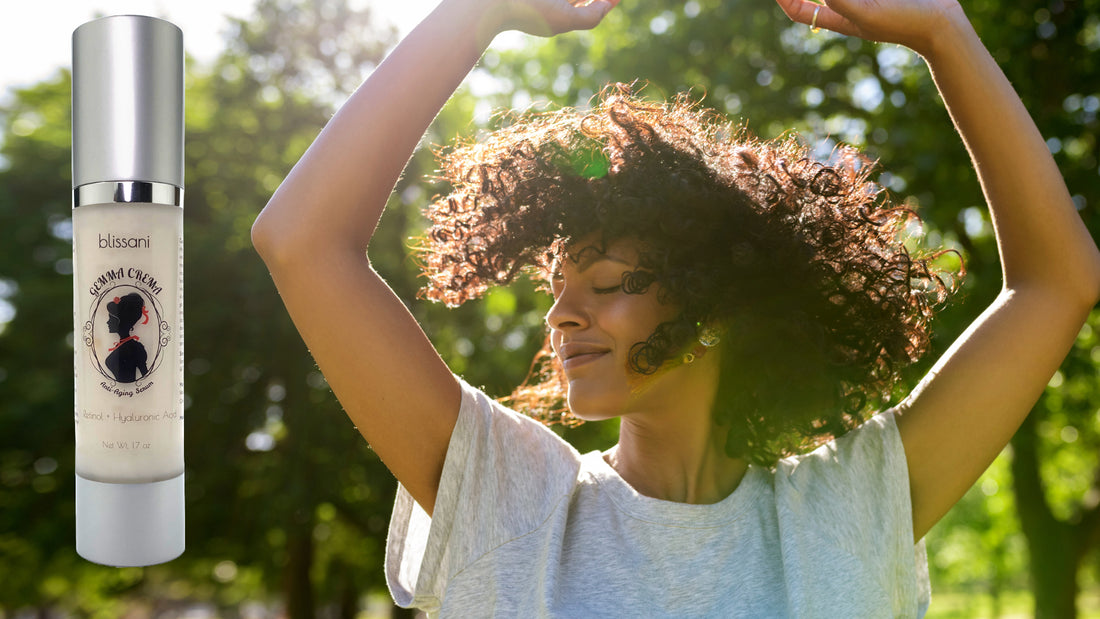
The Gemma Crema Anti-Aging Serum combines vegan retinol with a blend of 25 botanical extracts — including green tea, sea kelp, chamomile, and hyaluronic acid — to address fine lines, uneven tone, and loss of firmness. Every ingredient serves a function: antioxidants neutralize free radicals, humectants restore moisture, and botanical peptide precursors support the skin's natural repair processes.
For men, the Very Toney Anti-Aging Serum delivers the same 25-botanical formula in a lightweight texture calibrated for typically thicker, oilier male skin. Natural skincare for anti-aging isn't one-size-fits-all, and effective formulation accounts for those differences.
What to Look for on Ingredient Labels
Learning to read an ingredient label is one of the most valuable skincare skills you can develop. Here's a quick guide:
Watch out for:
- Methylparaben, propylparaben, butylparaben (synthetic preservatives)
- Sodium lauryl sulfate or sodium laureth sulfate (harsh cleansing agents)
- "Fragrance" or "parfum" listed without disclosure (a red flag for hidden irritants)
- PEGs (polyethylene glycols) and other petroleum-derived ingredients
Signs of quality:
- Recognizable botanical names (Latin binomials like Rosa canina for rosehip)
- Short, purposeful ingredient lists with clear functional roles
- Third-party cruelty-free certification (like Leaping Bunny)
- Transparent sourcing and manufacturing location — US-made products are subject to FDA manufacturing standards
Why Vegan and Cruelty-Free Matters — for Your Skin and Beyond
Vegan skincare excludes animal-derived ingredients like lanolin, beeswax, and collagen. This matters for ethical reasons, but it also has practical skin benefits: plant-based alternatives are often less occlusive, less likely to clog pores, and better tolerated by sensitive skin types.
Cruelty-free certification means no ingredient or finished product has been tested on animals — a standard that many countries now require by law, but that US brands must actively choose to meet. When a brand seeks cruelty-free certification voluntarily, it signals a broader commitment to transparency and responsible formulation.
Choosing vegan, cruelty-free skincare isn't just an ethical stance — it often correlates with cleaner formulas, more honest labeling, and brands that are genuinely accountable for what they put on the market.
Frequently Asked Questions
Is natural skincare effective for sensitive skin?
Generally, yes — and often more so than conventional alternatives. Natural formulas that exclude synthetic fragrance, sulfates, and parabens remove some of the most common triggers of skin sensitivity. Ingredients like calendula, chamomile, and aloe vera have well-documented soothing properties. That said, natural doesn't automatically mean non-reactive. Essential oils, for example, can irritate some skin types. Always patch-test new products.
Can plant-based ingredients really compete with pharmaceutical-grade actives?
For many concerns, yes. Salicylic acid — the gold standard for acne-prone skin — comes from white willow bark. Retinol's natural plant analogues have been validated in clinical studies for anti-aging efficacy. The gap between "natural" and "clinical" is narrowing as research into botanical actives grows. The key difference is often formulation quality, not ingredient origin.
How long does it take to see results from natural skincare?
Natural skincare typically works with your skin's biology rather than forcing rapid surface changes, so patience matters. Most people see meaningful improvements in texture, tone, and clarity within four to eight weeks of consistent use. Anti-aging serums, in particular, work best as part of a daily routine maintained over time — skin cell turnover operates on roughly a 28-day cycle, and results compound with continued use.
Frequently Asked Questions
Common questions about this topic
What does it mean when a skincare product is labeled as "natural"?
The term "natural" isn't regulated by the FDA, so brands can use it loosely in marketing. Truly natural skincare contains plant-derived, mineral, or naturally occurring ingredients rather than synthetic chemicals, and importantly, avoids harmful additives like parabens, sulfates, and synthetic fragrance.
Does natural skincare actually work, or is it just a marketing trend?
Yes, natural skincare does work—the science behind it is compelling. Plant-based ingredients like antioxidant-rich botanical oils and plant-derived retinol have been solving skin problems for centuries and offer real benefits backed by research.
What harmful chemicals should I avoid in skincare products?
You should avoid parabens (linked to hormone disruption), sulfates like SLS and SLES (which strip the skin's natural moisture barrier), synthetic fragrance (which can hide undisclosed irritants), phthalates, and formaldehyde releasers. Reading ingredient lists carefully helps you identify these unwanted additives.