
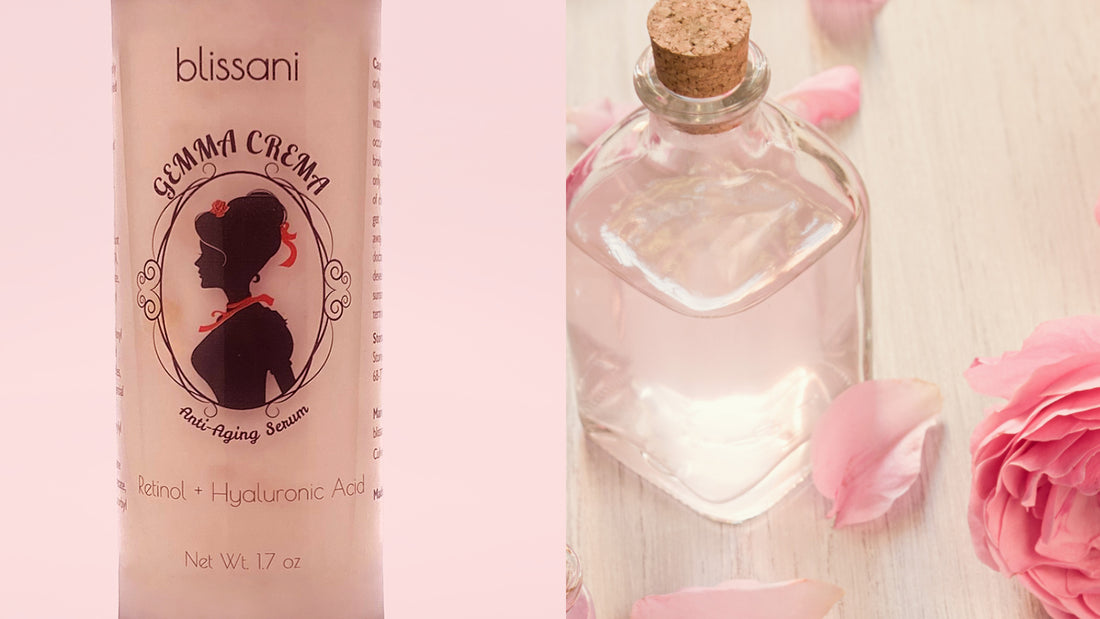
Unlock Radiant Skin With This Natural Anti-Aging Serum
Share
Why Rose Water Has Earned Its Place in Anti-Aging Skincare
Rose water isn't a trend. It's been used in skincare formulations for over a thousand years, with roots in Persian medicine and Ayurvedic practice. What kept it relevant isn't nostalgia — it's chemistry. Rosa damascena extract contains phenylethanol, flavonoids, and anthocyanins that work as both antioxidants and anti-inflammatory agents. A 2017 study published in the Journal of Traditional and Complementary Medicine confirmed measurable antioxidant activity in rose water, which means it actively neutralizes free radicals that contribute to premature aging. That's a meaningful function in any anti-aging formula, not just a pleasant fragrance note.
How Rose Water Actually Affects Your Skin
Rose water works on a few different levels at once, which is part of why it pairs well with other active ingredients rather than competing with them.
First, it's a mild astringent. The natural tannins in rose water help tighten pores and reduce surface oil without stripping the skin's moisture barrier — a balance that's genuinely difficult to achieve with synthetic astringents. Second, its pH typically falls between 4.0 and 4.5, which is close to the skin's natural acidic mantle (around 4.7). This makes it useful for restoring balance after cleansing, especially if you've used a product that skews alkaline. Third, the anti-inflammatory compounds — particularly kaempferol and quercetin — can calm redness and reduce the kind of low-grade chronic inflammation that accelerates collagen breakdown over time.
None of this is magic. It's just a well-understood ingredient doing consistent work when used regularly.
The Case for Pairing Rose Water With Retinol and Hyaluronic Acid
Rose water is effective on its own, but it really performs when it's part of a thoughtfully layered formula. Retinol — a derivative of vitamin A — is one of the most clinically supported ingredients for reducing fine lines and increasing cell turnover. The catch is that retinol can be irritating, especially for people with sensitive skin. Rose water's anti-inflammatory properties help offset that irritation, making the combination more tolerable for daily use.
Hyaluronic acid is another natural pairing. It's a humectant that can hold up to 1,000 times its weight in water, pulling moisture into the skin and keeping it there. Rose water contributes its own light hydration while also helping to prep the skin's surface to absorb heavier hydrating molecules more efficiently. Vitamin C rounds things out by supporting collagen synthesis and brightening hyperpigmentation — and rose water's antioxidant activity helps stabilize it, since vitamin C is notoriously prone to oxidation.
When these ingredients are combined in a single serum, you get a product that addresses multiple signs of aging at once: texture, tone, fine lines, and moisture loss.
What Makes blissani's Gemma Crema Different
A lot of serums list rose water somewhere near the bottom of their ingredient deck, which usually means it's present in trace amounts — enough to put it on the label, not enough to do much. blissani's Gemma Crema Vegan Anti-Aging Serum uses organic rose essential water as one of its core ingredients, meaning it's part of the formula's foundation rather than a marketing afterthought.
The serum is formulated with retinol, hyaluronic acid, and vitamin C alongside the rose water — the combination described above — and it's built entirely on vegan, cruelty-free ingredients made in the US. There are no animal-derived ingredients, no animal testing, and the manufacturing stays domestic. For a $29 serum, that's a straightforward value proposition: you're getting active, well-researched ingredients in a clean, transparent formula.
It's worth noting that Gemma Crema is designed for general anti-aging use — fine lines, uneven tone, dullness. If you're also dealing with acne or excess oil, blissani's Clear line (the face wash, toner, and spot solution) addresses those concerns separately, which keeps each product focused rather than trying to do everything at once.
How to Use a Rose Water Serum for Best Results
Application order matters more than most people realize. Serums go on after cleansing and toning, but before moisturizer. The logic is simple: serums contain smaller molecules and higher concentrations of actives, so they need direct contact with clean skin. Putting a heavier moisturizer down first blocks that absorption.
For a rose water-based anti-aging serum, apply 3–4 drops to your fingertips and press gently into the skin — don't rub. Pressing distributes the product without creating friction that can irritate the skin barrier. If your serum contains retinol, nighttime application is preferable since retinol degrades with UV exposure. If you use it in the morning, follow with SPF 30 or higher.
Consistency matters more than frequency. Using a serum every day for 60–90 days will show more results than using it intensively for two weeks. Collagen remodeling and cell turnover happen on a biological timeline, not an immediate one.
Making Rose Water at Home: A Simple Option
If you want to add rose water to your routine outside of a serum — as a toner mist or a base for a DIY mask — it's straightforward to make at home. Simmer dried organic rose petals (not florist roses, which are often treated with pesticides) in distilled water for about 20–30 minutes until the petals lose most of their color. Strain the liquid, let it cool, and store it in a glass bottle in the refrigerator. It'll keep for about two weeks without preservatives. The concentration won't match a standardized extract, but it's a low-cost way to add mild hydration and scent to your routine.
The short version: Rose water is a genuinely functional skincare ingredient with real antioxidant and anti-inflammatory activity — not just a pleasant-smelling filler. It works best when paired with complementary actives like retinol, hyaluronic acid, and vitamin C, which is exactly how it's used in Gemma Crema. Use it consistently, apply it in the right order, and protect your skin with SPF during the day. That's the whole routine.
Frequently Asked Questions
Common questions about this topic
Will rose water work for my oily skin without making it feel dry?
Yes — rose water's natural tannins act as a mild astringent to tighten pores and reduce surface oil while preserving your skin's moisture barrier, unlike harsher synthetic astringents that can over-dry your skin. This balanced approach makes it particularly effective for oily skin types that still need hydration.
How do the specific compounds in rose water (phenylethanol, flavonoids, and anthocyanins) actually prevent aging?
These compounds function as antioxidants and anti-inflammatory agents that actively neutralize free radicals — the unstable molecules responsible for premature aging and skin damage. The 2017 study mentioned confirms this isn't just anecdotal; rose water has measurable antioxidant activity that delivers real anti-aging benefits.
Can I use rose water with other active ingredients, or will it interfere with their effectiveness?
Rose water pairs well with other actives rather than competing with them, so you don't have to choose between rose water and other anti-aging ingredients. Its gentle nature and multi-level benefits make it a complementary addition to most skincare routines.