
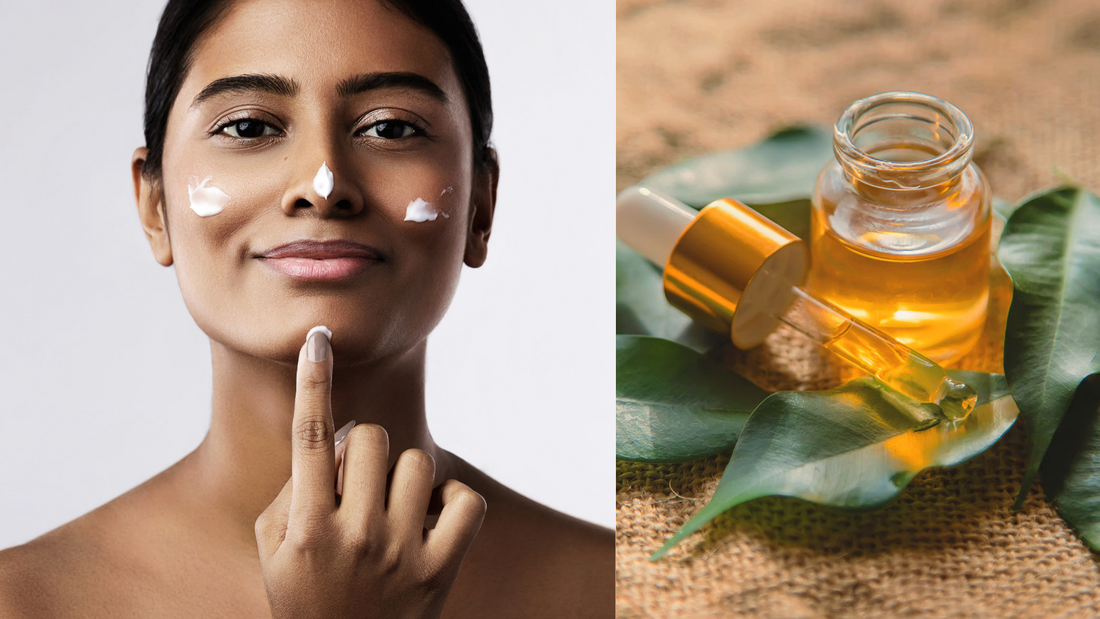
Tea Tree Oil for Skin vs Acne
Tea tree oil is an essential oil with antibacterial properties which can be used topically to improve: athlete's foot, toenail fungus, dandruff and acne. Tea tree oil is often referred to as melaleuca oil in beauty products. The oil is derived by steaming the leaves of the Australian tea tree. It is often found in soaps, deodorants, and lotions as it is a highly effective natural ingredient. There is anecdotal evidence (meaning people say, but there is no scientific proof yet) tea tree oil helps with bad breath as well.

We put tea tree oil in our blissani Naturals Clear Face Wash for its acne-fighting properties, so that is our focus. The scientific evidence for the effectiveness of tea tree oil is strong. While we would caution, there is still no cure for acne, some ingredients are more effective than others. The following quote is from the study : "A comparative study of tea-tree oil versus benzoyl peroxide in the treatment of acne"
…We have performed a single-blind, randomised clinical trial on 124 patients to evaluate the efficacy and skin tolerance of 5% tea-tree oil gel in the treatment of mild to moderate acne when compared with 5% benzoyl peroxide lotion. The results of this study showed that both 5% tea-tree oil and 5% benzoyl peroxide had a significant effect in ameliorating the patients' acne by reducing the number of inflamed and non-inflamed lesions (open and closed comedones), although the onset of action in the case of tea-tree oil was slower. Encouragingly, fewer side effects were experienced by patients treated with tea-tree oil.
Benzoyl Peroxide works similar to tea tree oil. It is an antibacterial. Like tea tree oil, it attacks bacteria which clogs pores, causing swelling and redness. Both tea tree oil and benzoyl peroxide work against acne by removing dead skin which also clogs pores, causing irritation and acne. However, some people find benzoyl peroxide dries out or irritates their skin. This causes them to seek a vegan-friendly alternative to help. So, it's nice to know at least one major study showed it's just as effective.

We formulated our vegan skincare line with the most effective natural ingredients we can find. They may not always be the most well known, but tea tree oil is getting its due popularity these days. It's great to see it in the grocery store. Being popular doesn't mean it's not cool anymore. We included it in our vegan-friendly, cruelty-free blissani Naturals Anti-Acne Face Wash. Its an all-natural formula which blends into a gentle foaming lather of tea tree oil, rosehip, red clover, marigold, aloe and 14 clean plant extracts which even skin tone, while eliminating impurities, dirt, and dulling dead cells. It's the easy way to put tea tree oil on your face everyday.

Frequently Asked Questions
Common questions about this topic
How does tea tree oil compare to benzoyl peroxide for treating acne?
According to clinical studies mentioned in the article, 5% tea tree oil gel was compared against 5% benzoyl peroxide lotion in treating mild to moderate acne. While both are effective, tea tree oil offers a natural alternative with strong scientific evidence supporting its acne-fighting properties.
Is tea tree oil safe to use directly on my skin, or do I need to dilute it?
The article mentions tea tree oil is commonly found in skincare products like face washes, soaps, and lotions rather than used as pure oil. This is the safer approach, as products like blissani Naturals Clear Face Wash incorporate tea tree oil at effective concentrations specifically formulated for facial use.
Can tea tree oil actually cure my acne?
No—the article cautions that while tea tree oil is highly effective for acne, there is still no cure for acne itself. However, some ingredients like tea tree oil are more effective than others at managing and improving acne symptoms.
Featured in This Article
blissani Clear Spot Solution
Vegan · Cruelty-Free · Made in USA
Formulated powered by clove oil — $16
Shop Now →Free shipping in the Continental USA · 30-day money-back guarantee
How to Use Tea Tree Oil on Your Face Without Overdoing It
One of the most common questions people have after learning about tea tree oil is pretty practical: how do you actually use it? Pure, undiluted tea tree oil is too concentrated to apply directly to your skin. At full strength it can cause redness, dryness, and irritation — especially for people with sensitive skin. The general guidance is to dilute it with a carrier oil (like jojoba or coconut oil) before applying it as a spot treatment. A ratio of about one to two drops of tea tree oil per twelve drops of carrier oil is a commonly cited starting point.
That said, the easiest and most consistent way to get tea tree oil into your daily routine is through a cleanser or a formulated spot treatment — products where the concentration is already calibrated for you. A face wash lets you work the ingredient across your whole face every day without the guesswork. When you rinse, you're not leaving a heavy oil layer on your skin, which matters if your skin leans oily or combination. A targeted spot treatment, on the other hand, lets you concentrate the benefit exactly where you need it most — on an active breakout or a stubborn clogged pore.
The blissani Naturals Clear Spot Solution is designed for exactly that kind of targeted use. It's a vegan, cruelty-free formula made in the USA that you can dab directly onto a blemish. It pairs well with the Clear Face Wash as part of a consistent two-step approach — cleanse first, treat second. Consistency matters more than intensity with natural ingredients, so building the habit is the real goal.
What to Look For (and What to Avoid) in Tea Tree Oil Skincare Products
Not all tea tree oil products are equal, and since the ingredient has gotten popular it's worth knowing what to pay attention to when you're shopping. First, look at where tea tree oil sits on the ingredient list. Ingredients are listed in order of concentration, so if it's buried near the bottom after a long list of fillers, there may not be enough of it to make a meaningful difference. That doesn't mean a lower concentration is always bad — formulations are complex — but it's a useful signal.
Second, pay attention to what else is in the formula. Tea tree oil can be a great ingredient and still get undermined by harsh sulfates, synthetic fragrances, or alcohol-heavy bases that strip and irritate your skin at the same time. A product that cleans your pores while drying out your skin barrier isn't actually helping your acne situation — a compromised skin barrier can actually make breakouts worse over time. Look for supporting ingredients that calm and hydrate: aloe, chamomile, marigold, and rosehip are all good signs.
Third, if you're committed to vegan and cruelty-free skincare, check that the brand's entire supply chain reflects that — not just the front-of-label claims. At blissani, our products are vegan, cruelty-free, and made in the USA, and that applies across everything we make, from the Clear Face Wash to the Clear Spot Solution. It's not a marketing layer — it's how we source and formulate.
Pairing Tea Tree Oil With Other Natural Acne Fighters
Tea tree oil works well on its own, but acne is caused by a combination of factors — excess oil, bacteria, dead skin cell buildup, and sometimes hormonal fluctuation — so a single ingredient rarely handles everything by itself. That's why layering complementary natural ingredients tends to produce better results than relying on any one thing.
Salicylic acid (derived from willow bark) is one natural ingredient that pairs well with tea tree oil because it works differently — it's a chemical exfoliant that gets into the pore and helps clear out the buildup that leads to blackheads and whiteheads. Together, you get both antibacterial action and exfoliation. Witch hazel is another good pairing; it acts as a natural astringent that tightens pores and reduces surface oiliness without the harshness of alcohol. The blissani Clear Face Toner uses witch hazel as a core ingredient, which is why a lot of people use the Wash and Toner together as a simple morning routine.
Clove oil is another antibacterial natural ingredient worth knowing about — it's one of the key actives in the blissani Clear Spot Solution and works alongside tea tree oil's approach to fighting acne-causing bacteria at the surface level.
The practical takeaway: tea tree oil is a well-supported, gentle alternative to harsher acne treatments, and the most reliable way to use it is through a consistently formulated product rather than DIY dilution. If you're already using a tea tree oil face wash daily, adding a targeted spot treatment for active breakouts is a logical next step that doesn't require overhauling your whole routine.