
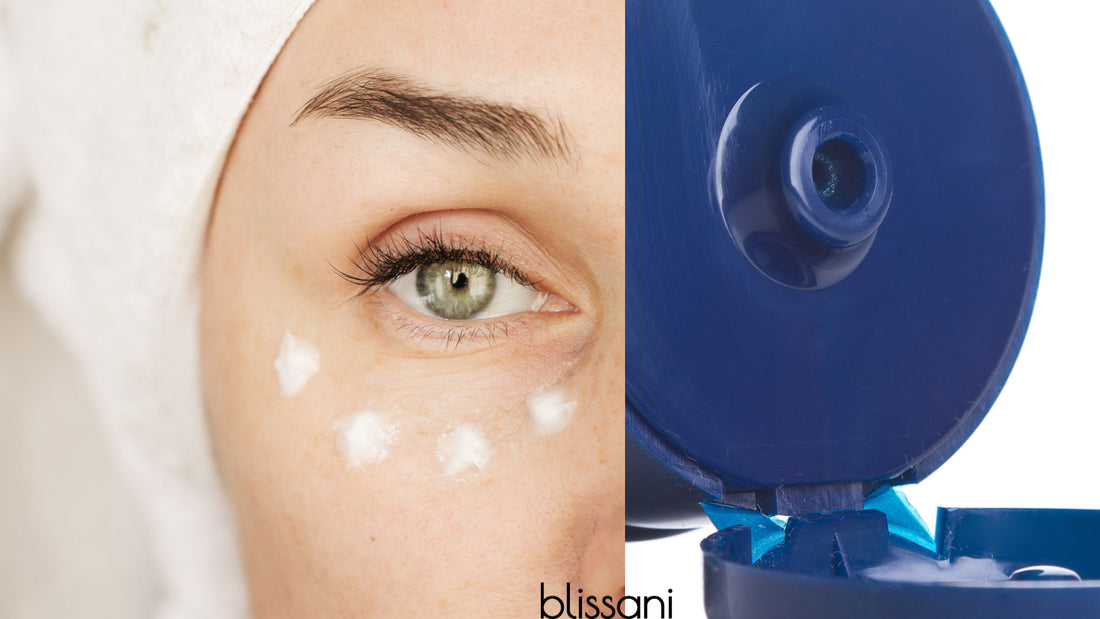
The Difference Between Retinol Cream and Retinoids
Share
Retinol vs. Retinoids: What's Actually the Difference?
If you've spent any time reading skincare labels or talking to a dermatologist, you've probably heard both "retinol" and "retinoids" thrown around — sometimes interchangeably, sometimes not. They're related, but they're not the same thing, and knowing the distinction can genuinely change how you shop for and use anti-aging or acne products.
The Short Answer: Retinoids Are the Whole Family
Think of retinoids as the umbrella category. Retinoids are a class of compounds derived from vitamin A, and they include everything from prescription-strength tretinoin and tazarotene to the gentler over-the-counter options most of us actually use. Retinol is one member of that family — probably the most common one you'll find in serums, creams, and toners sold without a prescription.
Other retinoids you might see on labels include retinaldehyde (also called retinal), retinyl palmitate, and adapalene. Each one sits at a different point on the potency spectrum, and each requires a different number of conversion steps before your skin can actually use it.
How Retinol Works in Your Skin
When you apply retinol topically, your skin has to convert it into its active form — retinoic acid — before it can do anything useful. That conversion happens in two steps: retinol becomes retinaldehyde, and retinaldehyde becomes retinoic acid. Each step takes time and loses a little potency along the way.
Once retinoic acid is present, it binds to retinoic acid receptors (RARs) in skin cells and signals them to speed up cell turnover, boost collagen production, and slow the breakdown of existing collagen. The result, over consistent use, is smoother texture, reduced fine lines, and more even skin tone. Studies suggest that over-the-counter retinol concentrations — typically between 0.025% and 1% — can produce meaningful improvements in wrinkle depth and skin texture after 12 weeks of regular use.
Because of those conversion steps, retinol is less immediately potent than prescription retinoids, but that also means it's significantly less likely to cause the irritation, peeling, and redness that prescription-strength options are notorious for.
Prescription Retinoids: More Power, More Caution
Prescription retinoids like tretinoin (retin-A) skip the conversion process — they deliver retinoic acid directly to skin cells. That's why they work faster and produce more dramatic results, but it's also why they can cause significant dryness, flaking, and sensitivity, especially in the first few weeks of use. Dermatologists often recommend starting with application just two or three times per week and gradually increasing frequency as skin adjusts.
Tazarotene is even stronger than tretinoin and is typically prescribed for severe acne or psoriasis. Adapalene sits closer to the gentler end of the prescription spectrum and is now available over-the-counter at 0.1% concentration for acne treatment.
The bottom line: prescription retinoids are genuinely effective, but they require medical guidance and a skin adjustment period that not everyone is willing or able to manage.
Which One Is Right for Your Skin?
For most people who aren't dealing with severe acne or significant photo-damage, a well-formulated retinol product is the more practical starting point. It delivers real results without the dermatologist visit, and the lower irritation risk makes it much easier to use consistently — which matters more than potency if you're not actually going to tolerate the stronger option.
Sensitive skin types especially benefit from starting with retinol rather than jumping straight to prescription retinoids. If you experience persistent irritation even with retinol, look for formulations that buffer the ingredient with hydrating compounds like hyaluronic acid or squalane, which can help offset dryness.
If you're dealing with stubborn cystic acne, significant hyperpigmentation, or deep wrinkles that haven't responded to OTC treatments after several months, that's when a conversation with a dermatologist about prescription retinoids makes sense.
What to Look for in a Natural Retinol Product
Not all retinol products are equal. Formulation matters — retinol is notoriously unstable and degrades quickly when exposed to light and air, so packaging (opaque, airless pumps or tubes) is worth paying attention to. You also want to look at what the retinol is paired with: ingredients that support the skin barrier will make the product more tolerable over time.
For those who prefer vegan and cruelty-free options, it's worth knowing that retinol itself can be synthetically derived — no animal sources required. Blissani's Gemma Crema Vegan Anti-Aging Serum is built around this approach: a retinol-based formula made without animal products or animal testing, produced in the US, and designed to minimize irritation while still delivering the cell-turnover benefits retinol is known for. At $29, it's a reasonable entry point for anyone wanting to add a consistent retinol step to their routine.
A Few Practical Notes Before You Start
Regardless of whether you go with retinol or a prescription retinoid, a few ground rules apply across the board. Use it at night — retinoids of all kinds increase photosensitivity, so daytime application without adequate SPF is counterproductive. Start slow: three nights per week for the first month, then increase from there based on how your skin responds. And don't layer retinol with other active ingredients like vitamin C or AHAs on the same night until your skin has adjusted — the combination can tip irritation from manageable to significant.
Results from retinol aren't instant. Most people see noticeable texture improvement around the 8–12 week mark, with more significant anti-aging effects accumulating over six months or longer. Consistency matters far more than concentration.
The practical takeaway: Retinol is a retinoid, just a gentler, more accessible one. If you're new to vitamin A skincare or have sensitive skin, start with a quality retinol product and give it at least three months before evaluating results. If OTC retinol isn't moving the needle after six months of consistent use, that's a reasonable time to talk to a dermatologist about prescription options.
Frequently Asked Questions
Common questions about this topic
If retinol is just one type of retinoid, should I be looking for other retinoids instead when shopping for products?
Not necessarily — it depends on your skin's tolerance and goals. Retinol is the most common OTC option because it's effective yet gentler than prescription retinoids, making it ideal for beginners. However, if you have resilient skin or want faster results, other retinoids like retinaldehyde or adapalene might be better choices, but these work best after your skin has acclimated to retinol first.
Why does the article mention that retinol requires "conversion steps" before my skin can use it, and does that make it less effective?
Retinol needs to be converted by your skin into retinoic acid (the active form) before it can actually work, which takes multiple steps and time. This doesn't make it less effective overall — it just means results are typically slower than prescription retinoids like tretinoin, which is already in the active form your skin can use immediately.
Does knowing that retinol is part of a larger retinoid family mean I could combine different retinoids for better results?
No — combining different retinoids is not recommended and can cause irritation, redness, and damage to your skin barrier. Stick with one retinoid product at a time, and only consider switching or layering after you've successfully built tolerance over several months.