
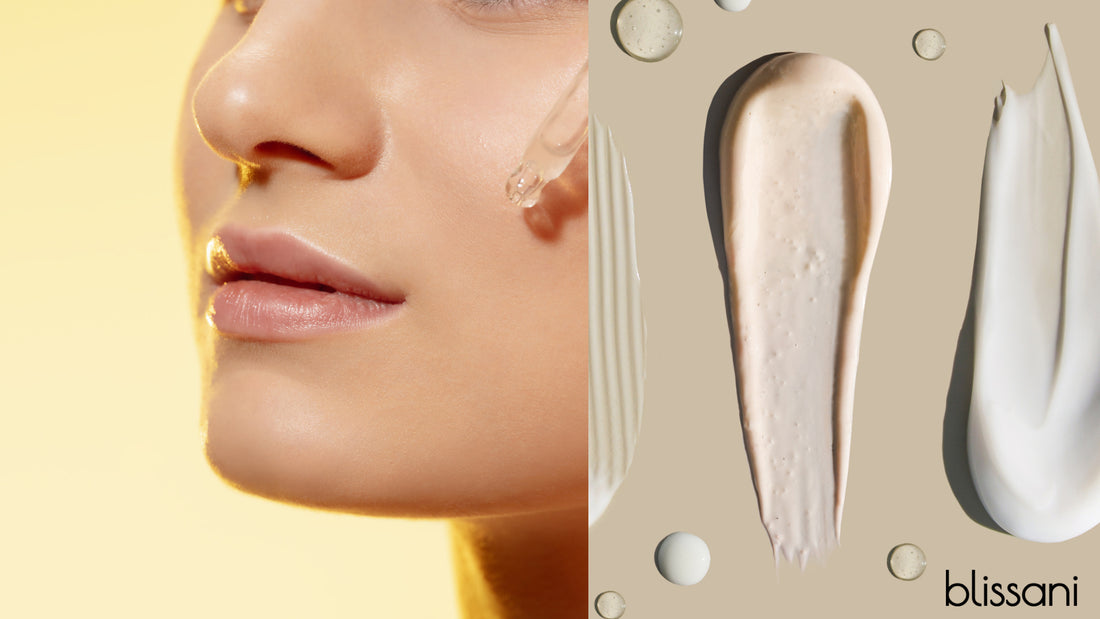
How To Reduce Wrinkles With Retinol Cream Secrets
Share
What Retinol Actually Does to Your Skin
Retinol is a form of Vitamin A, and it's one of the most studied ingredients in dermatology. When you apply it to your skin, it binds to retinoic acid receptors in skin cells and triggers a cascade of activity: cell turnover speeds up, collagen synthesis increases, and the enzymes that break down existing collagen get suppressed. The result, over weeks and months of consistent use, is smoother texture, fewer visible fine lines, and more even skin tone.
To put a number on it: studies have shown that topical retinol at concentrations of 0.1% to 1% can increase epidermal thickness and stimulate collagen I production measurably within 12 weeks. That's not marketing language — that's peer-reviewed data. The skin you see after consistent retinol use is genuinely structurally different from skin that hasn't had that treatment.
Retinol vs. Retinoids: What's the Difference and Which One Do You Need?
The word "retinoid" is an umbrella term for all Vitamin A derivatives. Retinol is one of them — it's the over-the-counter version. When your skin absorbs retinol, it converts it first to retinaldehyde, then to retinoic acid, which is the biologically active form. Prescription tretinoin (Retin-A) skips those conversion steps and delivers retinoic acid directly, which is why it works faster but also causes more irritation.
Adapalene (found in products like Differin) is a synthetic retinoid designed primarily for acne but also used off-label for anti-aging. Retinyl palmitate is a milder ester form — gentler but slower to show results. For most people who aren't dealing with severe acne or significant photodamage, a well-formulated over-the-counter retinol between 0.25% and 0.5% is an effective starting point that your skin can usually tolerate without significant peeling or redness.
How to Add Retinol to Your Routine Without Wrecking Your Skin Barrier
The most common mistake people make with retinol is using it too much, too soon. Your skin needs time to build tolerance. Start with application two nights per week for the first month, then move to every other night, and eventually nightly if your skin handles it well. Always apply retinol at night — UV exposure deactivates it and it increases photosensitivity, so sunscreen during the day is non-negotiable.
Apply retinol to dry skin (waiting 20–30 minutes after cleansing reduces irritation), use a pea-sized amount for your entire face, and follow with a moisturizer to reinforce your barrier. If you experience significant redness or flaking, reduce frequency before you reduce the concentration. Layering retinol under a hydrating serum or moisturizer containing ceramides, hyaluronic acid, or niacinamide can also buffer the initial adjustment period.
What Ingredients Work Well With Retinol — and What to Avoid
Retinol pairs well with peptides, hyaluronic acid, niacinamide, and antioxidants like Vitamin C (though Vitamin C is best used in the morning while retinol stays in your nighttime routine). Peptides are particularly complementary — they signal fibroblasts to produce collagen through a different pathway than retinol, so the two approaches stack rather than compete.
What to avoid using at the same time as retinol: AHAs (glycolic, lactic acid), BHAs (salicylic acid), and benzoyl peroxide. These can over-exfoliate and degrade retinol simultaneously, leading to irritation without added benefit. If you use exfoliating acids, use them on alternate nights.
If you're looking for a vegan, cruelty-free serum that pairs well with a retinol routine, blissani's Gemma Crema anti-aging serum is formulated with botanical actives that support skin hydration and tone — made in the US without animal-derived ingredients. It fits naturally into a morning routine while retinol handles the overnight work.
Realistic Expectations: What Retinol Can and Can't Fix
Retinol is effective, but it has limits. Fine lines from collagen loss respond well. Deep, etched wrinkles — especially expression lines reinforced by years of muscle movement — respond less dramatically. Dark spots from UV damage and post-inflammatory hyperpigmentation improve with consistent retinol use, but complete fading can take six months or more. Pore size won't shrink dramatically, though the improved cell turnover can make pores appear less clogged and therefore smaller.
One thing retinol genuinely cannot do is reverse sagging caused by volume loss or gravitational changes in facial structure. For that, you're looking at filler or surgical options. Within its lane, though — texture, tone, fine lines, collagen support — retinol is one of the few over-the-counter ingredients with the clinical evidence to back up its reputation.
Retinol and Sensitive Skin: Is It Off the Table?
Not necessarily. People with rosacea, eczema, or generally reactive skin have historically avoided retinol because of irritation risk, but that doesn't mean it's completely inaccessible. Encapsulated retinol formulations release the ingredient gradually, reducing the spike of retinoic acid conversion and lowering irritation. Bakuchiol, a plant-derived compound from the Psoralea corylifolia seed, has shown in clinical studies to deliver comparable improvements in fine lines and pigmentation with significantly less irritation — a legitimate alternative for skin that won't tolerate even low-dose retinol.
If you have sensitive skin, patch test any new retinol product on your inner arm for a week before applying it to your face. Start at 0.1% or lower. A barrier-supporting moisturizer used immediately after retinol application is not optional — it's part of the protocol.
The practical takeaway: Retinol works, but it rewards patience and consistency more than intensity. Use a low concentration, apply it at night, protect your skin in the morning, and give it at least three months before judging results. Pair it with hydrating and barrier-supporting products — not more exfoliation. If your skin is sensitive or you're committed to fully natural and vegan formulations, bakuchiol is worth a serious look as an alternative that won't compromise your values or your skin barrier.
Frequently Asked Questions
Common questions about this topic
How long do I need to use retinol before I actually see results on my wrinkles?
According to peer-reviewed studies, topical retinol at effective concentrations (0.1% to 1%) can produce measurable changes in collagen production and skin thickness within 12 weeks of consistent use. However, visible improvements in fine lines and wrinkles typically become noticeable after several weeks of regular application, with continued improvements over months.
If retinol converts to retinoic acid in my skin, why shouldn't I just use prescription retinoids instead?
While prescription retinoids are already in their active retinoic acid form and may work faster, over-the-counter retinol gives your skin a gentler conversion process, which can mean less irritation for beginners. The choice depends on your skin's tolerance level and whether you want a more gradual introduction to retinoid therapy.
Does the percentage of retinol in a cream actually matter for wrinkle reduction?
Yes, significantly. The article cites that concentrations between 0.1% to 1% are needed to produce measurable increases in collagen and epidermal thickness. This means a retinol cream with a lower concentration than 0.1% may not trigger the structural skin changes necessary for visible wrinkle reduction.