
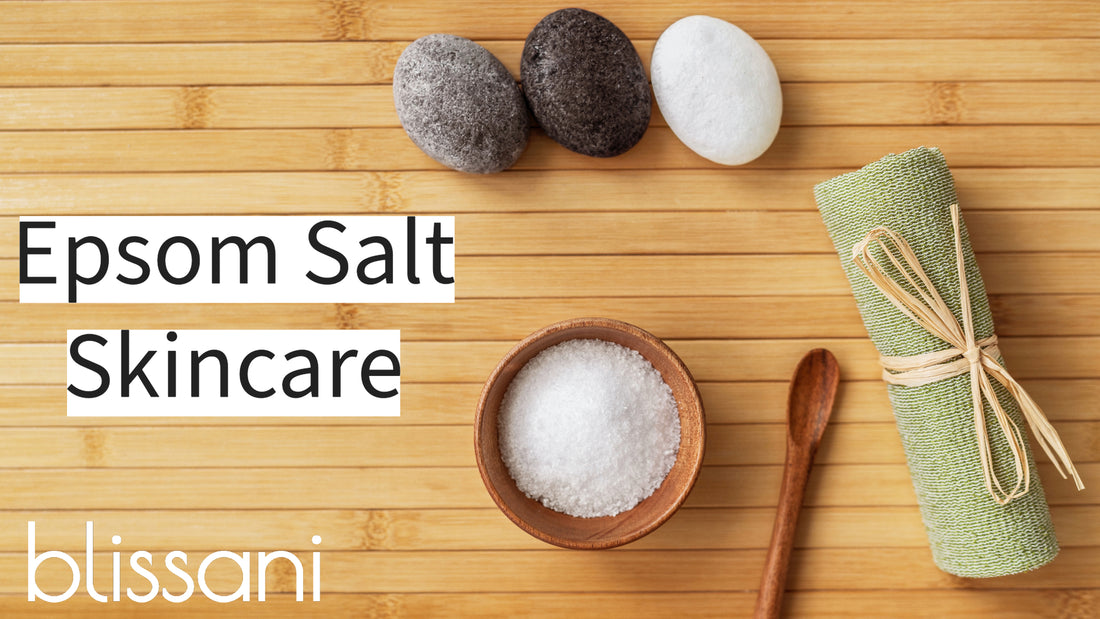
The Transformative Power of Epsom Salt in Vegan Skincare with blissani
Share
What Is Epsom Salt and Why Does It Show Up in Skincare?
Epsom salt is magnesium sulfate — a mineral compound that looks like coarse table salt but has nothing to do with sodium chloride. It dissolves readily in water and has been used for centuries in therapeutic baths and topical treatments. In skincare, it works through two distinct mechanisms: the magnesium component supports cellular function and hydration regulation, while the sulfate component assists with detoxification by drawing impurities toward the skin's surface. These aren't marketing claims — both mechanisms have been studied at the biochemical level, and understanding them helps you use Epsom salt more effectively rather than just tossing it in a bath and hoping for the best.
How Magnesium Actually Affects Your Skin
Magnesium is involved in over 300 enzymatic reactions in the human body, several of which directly influence skin health. At the cellular level, magnesium helps regulate skin barrier function by supporting the production of fatty acids that keep the stratum corneum — your skin's outermost layer — intact and hydrated. When magnesium levels are low, the skin can become dry, irritated, and more prone to inflammation.
Topical magnesium absorption through the skin (transdermal absorption) is modest compared to dietary intake, but research published in the Wiley online library suggests it can still meaningfully affect local skin hydration and reduce inflammatory markers. For people dealing with dry patches, redness, or general skin sensitivity, incorporating magnesium sulfate into a soak or exfoliating scrub a few times per week can provide noticeable relief. It won't replace a good moisturizer, but it works well alongside one.
There's also a connection between magnesium and collagen synthesis. Magnesium activates enzymes involved in collagen cross-linking, the process that gives collagen fibers their structural integrity. As we age and natural collagen production slows — typically declining at roughly 1% per year after age 20 — anything that supports the quality of existing collagen matters. This is one reason Epsom salt keeps appearing in anti-aging skincare conversations.
The Role of Sulfate in Clearing Pores and Skin Detoxification
Sulfate in Epsom salt functions differently from the sulfates found in foaming cleansers (like sodium lauryl sulfate), which can strip the skin. In magnesium sulfate, the sulfate is part of a mineral salt that acts osmotically — meaning it draws water and, with it, impurities toward the skin's surface. This is why Epsom salt soaks have long been used to reduce swelling and pull out localized infections.
For acne-prone skin, this osmotic action can help decongest pores by loosening debris and excess sebum. It won't replace a targeted acne treatment, but as a preparatory step — used before cleansing — it can make your cleanser more effective. The sulfate component also has mild antibacterial properties, which matters when dealing with the bacteria (primarily Cutibacterium acnes) that contribute to breakouts.
Why Pair Epsom Salt with a Vegan Skincare Routine?
Vegan skincare avoids animal-derived ingredients like lanolin, collagen sourced from livestock, beeswax, and carmine. Beyond the ethical dimension, there's a practical one: many plant-based and mineral alternatives are genuinely effective and often less likely to cause allergic reactions than their animal-derived counterparts. Epsom salt fits naturally into a vegan routine because it's a mineral — no animals involved in its production, and its sourcing has a relatively low environmental footprint compared to synthetically processed skincare chemicals.
The broader vegan skincare philosophy also tends to emphasize skin-supporting rather than skin-stripping formulations. Epsom salt aligns with this approach: it exfoliates gently through its granular texture and supports skin function through mineral replenishment rather than harsh chemical intervention. If you're already using vegan, cruelty-free skincare products, adding an Epsom salt step is a consistent extension of that routine rather than a departure from it.
Practical Ways to Use Epsom Salt in Your Skincare Routine
There are a few straightforward ways to use Epsom salt on your skin without overcomplicating things:
As a facial scrub: Mix a small amount of finely ground Epsom salt with a gentle cleanser or a carrier oil like jojoba or sweet almond oil. Use it on damp skin in small circular motions, then rinse thoroughly. Limit this to once or twice a week — the granular texture is effective but can be abrasive if overused, especially on sensitive or acne-inflamed skin.
As a full-body soak: Add one to two cups of Epsom salt to a warm bath and soak for 15–20 minutes. This is a reliable way to support whole-body magnesium levels through transdermal absorption while softening rough skin on elbows, knees, and heels.
As a targeted spot treatment: Dissolve a small amount of Epsom salt in warm water and apply it with a cotton pad to specific areas — particularly useful for inflamed spots or congested areas before cleansing.
After any Epsom salt application, follow up with your regular routine. A good toner can help restore the skin's pH, and a serum with active ingredients like peptides or antioxidants can address specific concerns — aging, pigmentation, or dullness — that Epsom salt alone won't fix.
What Epsom Salt Can and Can't Do
Epsom salt is a solid supporting player in a skincare routine, but it's not a standalone solution. It won't significantly reduce deep wrinkles on its own, and it's not a replacement for proven active ingredients like retinoids, vitamin C, or niacinamide. What it does well: gentle exfoliation, pore support, hydration maintenance through magnesium replenishment, and a modest anti-inflammatory effect. For people who prefer keeping their routine minimal and ingredient-conscious, it earns its place.
The practical takeaway: use Epsom salt as a prep or exfoliation step — not as your primary treatment. Combine it with a consistent vegan skincare regimen that includes a quality cleanser, toner, and targeted serum. That layered approach is where you'll actually see results over time.
Frequently Asked Questions
Common questions about this topic
Can I use Epsom salt directly on my face, or should I only use it in baths?
While Epsom salt is beneficial for skin, it's too abrasive to use directly on the delicate facial area. The article focuses on Epsom salt's mechanisms for overall skin health, but for facial application, it's better to look for skincare products like blissani's formulations that incorporate Epsom salt in properly balanced concentrations designed for the face.
How long does it take to see results from using Epsom salt in my skincare routine?
The timeline depends on your skin's magnesium levels and barrier function status. Since magnesium supports cellular function and hydration regulation at the biochemical level, consistent use over several weeks is typically needed to notice improvements in hydration and reduced irritation as your skin barrier strengthens.
If I have sensitive or inflamed skin, is Epsom salt safe to use?
Yes, Epsom salt can actually be beneficial for inflamed skin since magnesium helps regulate skin barrier function and reduce irritation when levels are optimized. However, start with lower concentrations or diluted applications to allow your skin to adjust, especially if you have very reactive skin.