
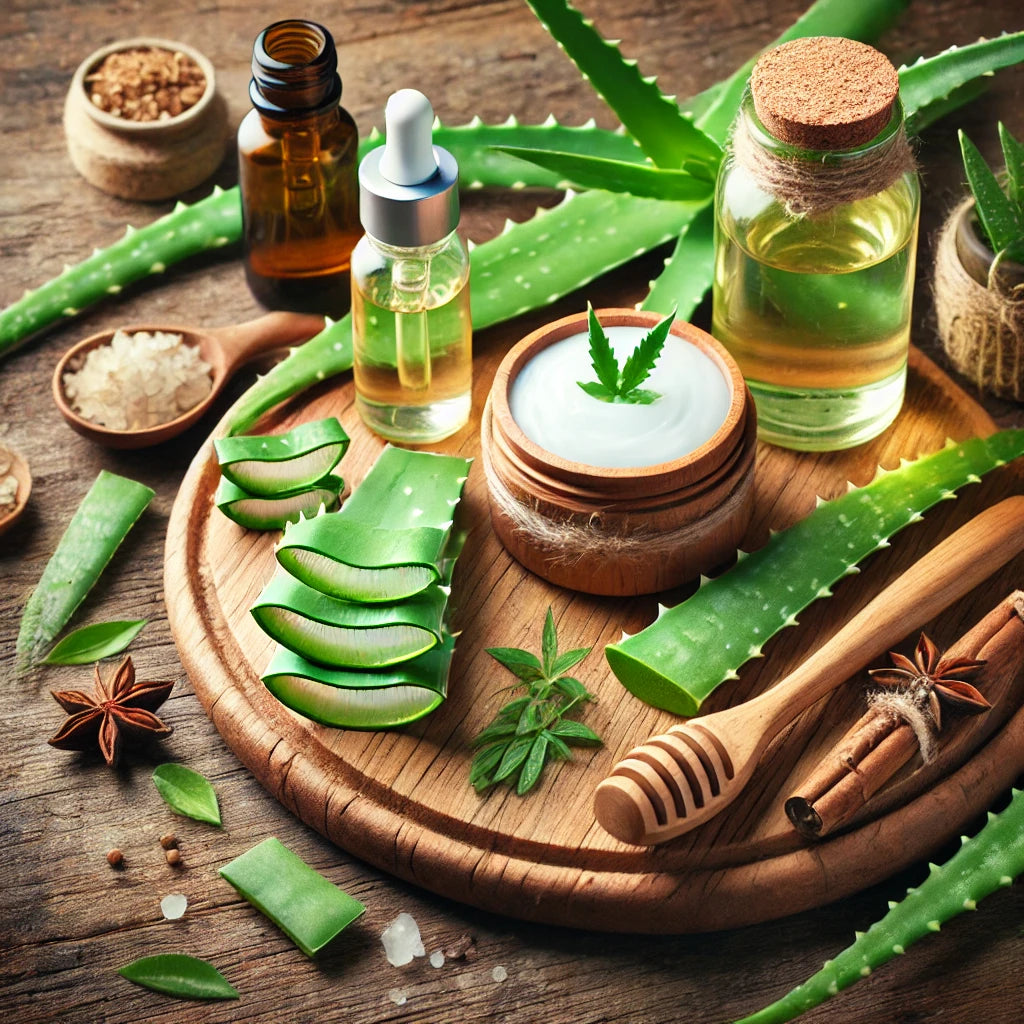
Aloe Vera Skin Benefits: 5 Reasons to Love This Miracle Plant
Share
Why Aloe Vera Belongs in Your Skincare Routine
Aloe vera has been used medicinally for over 6,000 years — ancient Egyptians called it the "plant of immortality," and modern dermatology has largely backed up the hype. The gel inside aloe vera leaves is made up of about 99% water, but that remaining 1% is packed with over 75 active compounds including vitamins A, C, and E, B12, folic acid, polysaccharides, and amino acids. That's a lot of functional chemistry in a single plant.
Here's what those compounds actually do for your skin — and how to use them effectively.
Aloe Vera Soothes Inflammation and Sunburn Fast
When your skin is red, irritated, or burned, aloe vera works through a few specific mechanisms. Its gel contains compounds called anthraquinones and polysaccharides that reduce prostaglandin synthesis — one of the primary drivers of inflammation. It also contains aloin and emodin, natural analgesic compounds that help dull pain at the skin's surface.
For sunburn specifically, aloe vera helps because it cools the skin on contact (the water content evaporates quickly, pulling heat with it) while the anti-inflammatory compounds slow the cascade of cellular damage underneath. Studies have shown that aloe vera can reduce healing time for first- and second-degree burns by as much as 9 days compared to conventional dressings.
If you're applying aloe after sun exposure, look for a product where aloe vera is listed near the top of the ingredient deck — not buried after a long list of fillers.
It's One of the Best Natural Humectants for Dry Skin
Aloe vera gel is classified as a humectant, meaning it attracts water molecules from the surrounding environment and draws them into the outer layers of the skin. The mucopolysaccharides in the gel — particularly acemannan — form a lightweight film on the skin's surface that locks that moisture in without feeling greasy or occlusive.
This makes aloe particularly useful for people with oily or combination skin who still deal with dehydration. Heavy creams and oils can feel suffocating on skin that's already producing excess sebum. Aloe delivers hydration in a way that feels breathable. It's also non-comedogenic, meaning it won't clog pores — a significant advantage over many traditional moisturizing agents.
Aloe Vera Actively Fights Acne-Causing Bacteria
Aloe vera contains two compounds — salicylic acid and sulfur — that are both independently effective against Cutibacterium acnes, the bacteria most commonly associated with breakouts. Salicylic acid is a beta-hydroxy acid (BHA) that exfoliates inside the pore lining, helping to prevent the blockages that lead to whiteheads and blackheads. Sulfur has long been used in dermatology as an antimicrobial and keratolytic agent.
Aloe also contains gibberellins and glucomannan, which have been shown to reduce inflammation around existing blemishes and support faster healing without leaving significant post-inflammatory hyperpigmentation behind.
When you're building a routine around clear skin, aloe pairs well with other targeted ingredients. The blissani Clear Face Wash combines aloe vera with tea tree oil and green tea extract — ingredients that work synergistically to clean pores, regulate sebum, and calm irritation without stripping the skin barrier. That kind of layered approach is more effective than any single ingredient alone.
It Supports Collagen Production and Reduces Fine Lines
Aloe vera's effect on aging skin comes primarily from two sources: its antioxidant content and its ability to stimulate fibroblast activity. Fibroblasts are the skin cells responsible for producing collagen and elastin — the structural proteins that keep skin firm and resilient.
A study published in the Annals of Dermatology found that women who took an aloe vera supplement over 90 days showed a measurable increase in facial collagen production and a reduction in the appearance of wrinkles. While topical application works differently than oral supplementation, the vitamin C, vitamin E, and beta-carotene in aloe gel do support collagen synthesis and protect existing collagen from free radical damage at the skin's surface.
Aloe also contains zinc, which acts as an astringent and helps tighten the appearance of pores — a small but noticeable effect that contributes to a more even skin texture over time.
Aloe Vera Speeds Up Wound and Scar Healing
The same compounds that make aloe effective for sunburn also help with minor cuts, abrasions, and post-breakout healing. Acemannan (the polysaccharide mentioned earlier) has been shown to stimulate macrophage activity — macrophages are the immune cells that clear debris and initiate tissue repair. This accelerates the skin's natural regeneration cycle.
Aloe also appears to reduce the overproduction of collagen that leads to raised or thickened scarring. Research on wound healing has found that aloe vera application results in more organized collagen deposition — which means scars tend to be flatter and less noticeable. For anyone dealing with acne scarring or post-procedure recovery, this is a meaningful benefit.
How to Get the Most Out of Aloe Vera
Using straight aloe gel from a leaf works, but the potency degrades quickly once the plant is cut, and the raw gel can contain aloin in concentrations that occasionally irritate sensitive skin. Formulated products that stabilize the active compounds tend to be more consistent in their results.
When reading ingredient labels, "aloe barbadensis leaf juice" or "aloe barbadensis leaf extract" near the top of the list indicates a meaningful concentration. Products that list aloe after the preservatives are essentially using it as a filler.
For a complete routine, consider the order of application: cleanse first, then apply lightweight aloe-based serums or toners, then seal with a moisturizer if your skin needs it. Most people with normal to oily skin find that aloe-forward products provide sufficient hydration on their own.
Aloe vera isn't a trend — it's one of the few skincare ingredients with thousands of years of use and a growing body of clinical research to support it. Use it consistently, layer it with complementary actives like tea tree oil or witch hazel, and give it at least four to six weeks before judging results. Skin turnover takes time, but aloe vera is worth the patience.
Frequently Asked Questions
Common questions about this topic
Can I use aloe vera gel directly from the plant on my skin, or do I need to buy a product?
You can use fresh aloe vera gel directly from the plant leaf, but make sure to remove the yellow latex layer underneath the skin first, as it can cause irritation. If you're concerned about contamination or prefer convenience, commercial aloe vera products formulated for skincare are also effective and often more stable.
How often should I apply aloe vera to get the anti-inflammatory and sunburn relief benefits mentioned in the article?
For sunburn or acute inflammation, you can apply aloe vera gel multiple times daily as needed since it's very gentle. For regular skincare routine use, 1-2 times daily is typically sufficient, though you can adjust based on your skin's response.
If aloe vera is 99% water, why is it better than just applying regular water to soothe irritated skin?
That remaining 1% contains over 75 active compounds—including anthraquinones, polysaccharides, and analgesic compounds—that actively reduce inflammation and pain at the cellular level, which plain water cannot do. Those bioactive ingredients are what make aloe vera specifically effective for healing rather than just temporary cooling.