
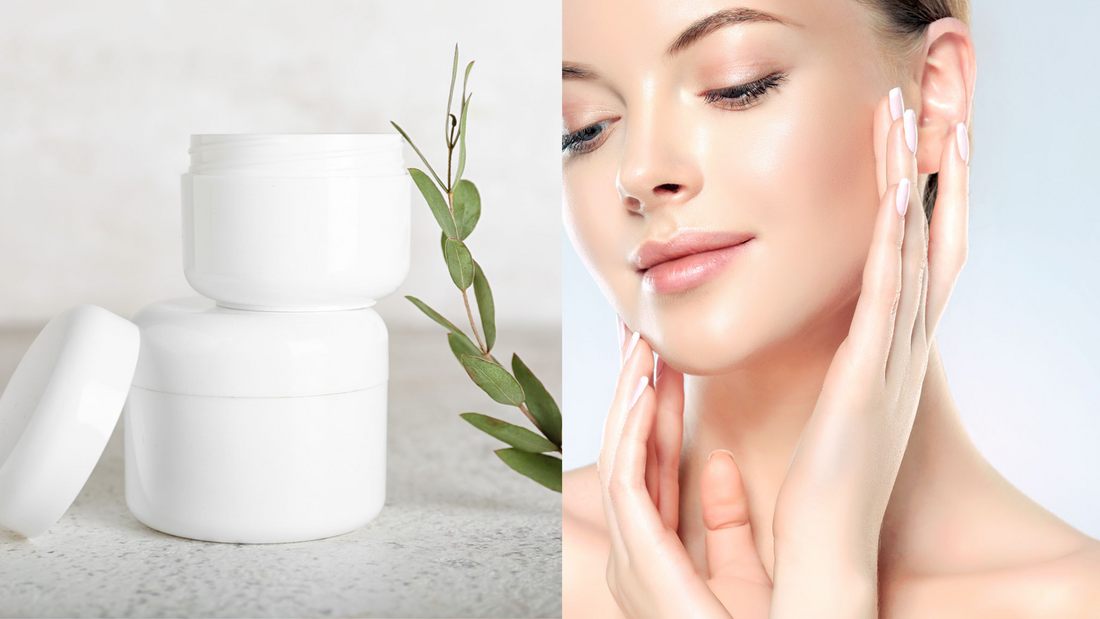
Unlock The Amazing Hyaluronic Acid Benefits For Youthful Skin
Share
What Is Hyaluronic Acid and Why Does Your Skin Need It?
Hyaluronic acid (HA) is a naturally occurring polysaccharide — a type of sugar molecule — that your body already produces on its own. It lives primarily in your skin, connective tissue, and eyes, where its main job is to hold onto water. And it does that job exceptionally well: a single gram of hyaluronic acid can bind up to six liters of water, making it one of the most effective moisture-retaining molecules in nature.
The catch? Your body's ability to produce HA declines with age. By your mid-40s, you may have roughly half the hyaluronic acid you had in your 20s. That drop contributes directly to the dryness, loss of volume, and fine lines that show up over time. Understanding how HA works — and how to support it — makes a real difference in how your skin looks and feels.
How Hyaluronic Acid Actually Works in Your Skin
HA functions as a humectant, meaning it pulls moisture from the environment and from deeper skin layers up toward the surface. When applied topically, it sits within the upper layers of the skin and acts like a sponge, continuously drawing in and holding water molecules. This creates a plumping effect that temporarily reduces the appearance of fine lines and gives skin a firmer, smoother texture.
Beyond hydration, hyaluronic acid plays a role in wound healing and has mild anti-inflammatory properties. It signals skin cells called fibroblasts to ramp up collagen and elastin production — the structural proteins responsible for keeping skin firm and elastic. So while HA itself isn't collagen, it actively supports the environment your skin needs to produce it.
Molecular weight matters here too. Low molecular weight HA (under 50 kDa) can penetrate deeper into the dermis, while high molecular weight HA (over 1,000 kDa) sits on the surface and provides immediate smoothing and barrier protection. The most effective skincare products use a blend of both.
Can You Boost Hyaluronic Acid Through Diet?
Your body synthesizes HA from compounds found in food, so what you eat does have an effect. Foods that support HA production include:
Leafy greens and root vegetables — magnesium-rich foods like spinach and sweet potatoes are cofactors in HA synthesis. Soy-based foods — compounds called phytoestrogens in soy have been shown in studies to stimulate HA production in skin tissue. Bone broth and collagen-rich foods — for non-vegans, these provide amino acids that support overall skin matrix production. Starchy vegetables like potatoes and sweet potatoes contain glucuronic acid, a direct building block of HA.
Oral HA supplements are widely available and some clinical studies do show modest benefits for skin hydration and elasticity at doses of 120–240 mg per day. Results vary, but they're worth considering as part of a broader skin health routine.
Topical Hyaluronic Acid: What to Look for in a Product
Not all HA serums deliver the same results. A few things to check when evaluating a product:
Multi-weight HA — look for products listing both sodium hyaluronate (a smaller, more penetrating form) and hyaluronic acid. Sodium hyaluronate has a lower molecular weight and absorbs more readily into skin layers where it can do deeper work.
Supporting ingredients — HA works better when paired with ingredients that reinforce the skin barrier, like niacinamide, peptides, or plant-based squalane. These help lock in the moisture HA attracts rather than letting it evaporate.
Application method — apply HA to slightly damp skin, then follow immediately with a moisturizer or serum. Applied to completely dry skin in low-humidity environments, HA can actually pull moisture out of deeper skin layers, which is the opposite of what you want.
If you're looking for an option that pairs hyaluronic acid with other active anti-aging ingredients, the blissani Gemma Crema anti-aging serum is formulated with HA alongside plant-based actives. It's vegan, cruelty-free, and made in the US — useful to know if those criteria matter to your shopping decisions.
Hyaluronic Acid vs. Other Common Humectants
HA often gets compared to other humectants in skincare, and for good reason — they serve a similar purpose but work differently. Glycerin is another widely used humectant that draws moisture to the skin surface. It's effective and well-tolerated, but doesn't have the same plumping capacity as HA. Alpha hydroxy acids (AHAs) like glycolic acid and lactic acid also have humectant properties, though their primary role is chemical exfoliation. Aloe vera gel contains mucopolysaccharides that behave similarly to HA at a surface level, making it a gentler alternative for sensitive skin types.
HA stands out because of its sheer water-holding capacity and its compatibility with nearly every skin type, including oily and acne-prone skin. It's non-comedogenic and doesn't add any oil or residue — just hydration.
Who Benefits Most from Hyaluronic Acid?
Almost everyone can benefit from HA, but certain groups see the most noticeable results. People in their 30s and beyond, when natural HA production starts declining measurably, often notice immediate improvements in skin plumpness and smoothness. Those dealing with dehydrated skin — which is different from dry skin and can affect oily skin types too — also respond well. If your skin feels tight after cleansing, looks dull, or shows fine lines that worsen through the day, dehydration is likely a factor and HA is one of the most targeted solutions.
People with sensitive or reactive skin tend to tolerate HA well since it's a substance the body already recognizes. It doesn't typically cause irritation, making it one of the safer active ingredients to add to a routine.
The practical takeaway: Hyaluronic acid works best as part of a consistent routine — applied to damp skin, layered under a moisturizer, and supported by a diet that gives your body the raw materials to produce its own. Start with a well-formulated serum, be consistent for at least four to six weeks, and pay attention to how your skin responds. Small, steady changes in hydration compound over time.
Frequently Asked Questions
Common questions about this topic
If hyaluronic acid pulls moisture from the environment, will it work on dry days or in low-humidity climates?
Hyaluronic acid is most effective in humid environments where it can draw moisture from the air, but it also pulls water from deeper skin layers, so it still works in dry climates—just make sure to apply it to damp skin and seal it with a moisturizer to prevent it from pulling water out of your skin instead.
Since my body produces half the hyaluronic acid by my mid-40s, at what age should I start using HA products to prevent that decline?
You can start using hyaluronic acid in your 20s and 30s as a preventative measure to maintain hydration and skin plumpness, but it becomes especially important once you hit your 40s when your natural production significantly drops.
Will using a hyaluronic acid serum actually replace the hyaluronic acid my body has lost, or does it just temporarily plump my skin?
Topical hyaluronic acid provides temporary hydration and plumping rather than permanently replacing what your body no longer produces, but consistent use can improve skin texture and the appearance of fine lines over time by keeping your skin properly moisturized.