
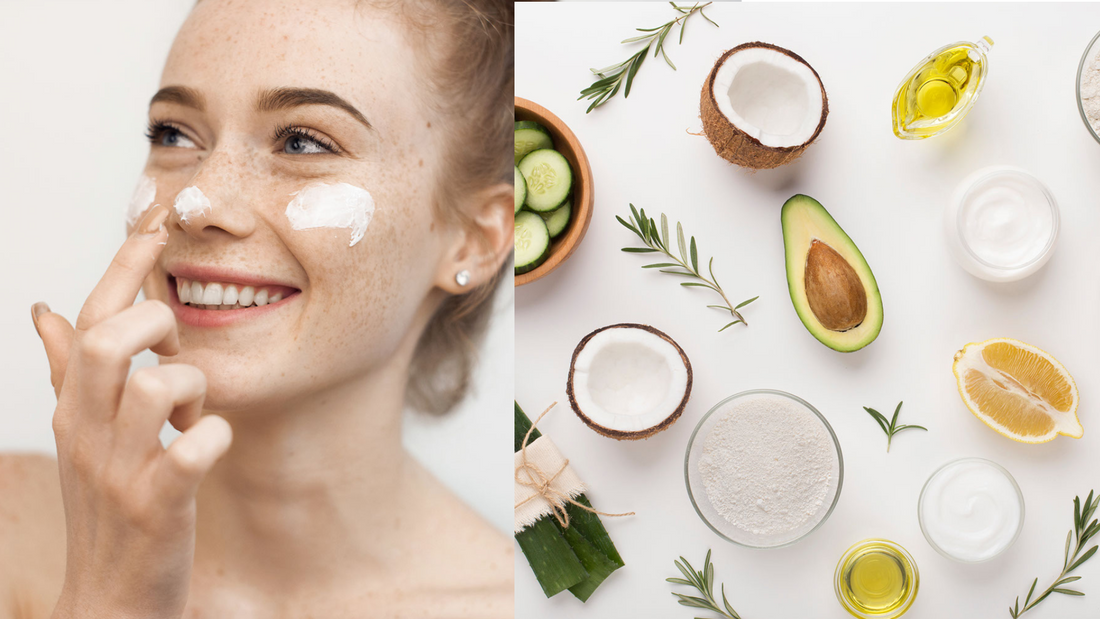
Top Natural Skin Care For Acne: Ingredients That Work!
Living with acne can be hard, and many people seek remedies. It helps to have some basic knowledge around acne and it's causes. There are many great prescription options as well as over the counter medications. However, the side effects of these lead people to seek a more natural and holistic remedy, and natural skin care for acne is safe and effective.
The Why?
To reduce blemishes, we'll need to reduce the cause of those blemishes. Some causes of acne are internal, and it's best to speak to a doctor about serious cases. Still, many blemishes are caused by bacteria or debris getting into the pores. So, a natural face wash will be the first key to a natural acne reducing routine.

Getting Clean
There are some uncommon natural methods to wash and reduce debris in your pores such as egg whites, honey and milk. Yet, more common ingredients such as apple cider vinegar, witch hazel and bentonite clay will also help clear your pores. Bentonite clay works great as a mask and apple cider vinegar is probably in your cupboard. We love witch hazel for our second step which is Toning.
Tighten Up
Once you have cleansed your face you'll want to tone it. In skincare, toning refers to the process of tightening (or making the pores smaller) to prevent debris and bacteria from getting into pores while improving your skin's overall appearance. Witch hazel, even by itself, is a wonderful natural toner. Licorice root is also a favorite among natural beauty enthusiasts and often used as a toner. Green tea is great for you on the inside and outside. We use it in our blissani toner.
Be the Shield
Your final step in your natural blemish fighting routine will most likely be protection. Now that your skin is clean, you'll want to prevent anything else from getting in there. A non-comedogenic (doesn't cause acne) sun-screen and/or moisturizer will be essential. A sun-screen with natural moisturizers is a great choice for the day and a natural moisturizer at night with anti-acne benefits is also a good choice. Some natural anti-aging products have retinol which may help reduce acne as well. We use retinol in our all natural anti-aging formulas here at blissani.
Jojoba oil provides a natural shield and moisture. It can be found in many natural beauty moisturizers. At blissani we like to say jojoba oil serves and protects. Aloe has many natural healing and moisturizing benefits. It moisturizes to protect the skin and helps cool inflammation caused by existing acne. Sunflower oil is a great carrier oil and moisturizer to use in a night-time natural moisture routine. You can find all three of these in our Very Toney and Gemma Crema anti-aging formulas.
We've told you some of our favorites, but recommend you check out healthline and webmd before experimenting with random ingredients. Natural ingredients are effective, but really strong in the wrong doses. So, make sure you do some research and buy your ingredients from a reputable source.

For further reading on acne in general we recommend our article:

Frequently Asked Questions
Common questions about this topic
Can I actually use egg whites, honey, and milk as face wash, or do I need to mix them into a recipe?
Yes, these ingredients can be used as natural cleansers, though they work best when combined into a simple face wash mixture rather than applied individually. The article mentions them as uncommon natural methods, so you may want to research specific recipes or dilution ratios to ensure they're effective for your skin type.
How often should I use bentonite clay as a mask if I have active acne?
While the article recommends bentonite clay as an excellent pore-clearing mask, it doesn't specify frequency. Most natural skincare experts suggest using clay masks 1-2 times per week to avoid over-drying your skin, but you should adjust based on your skin's response.
If I use apple cider vinegar as a cleanser, will the strong smell fade once it dries on my face?
Apple cider vinegar does have a potent smell, but it typically dissipates as the product dries and once you apply other skincare steps like toning. Many people find the smell worth it for the acne-fighting benefits, though you can dilute it with water if the scent is too strong.
Featured in This Article
blissani Clear Face Toner
Vegan · Cruelty-Free · Made in USA
Formulated with licorice root — $15
Shop Now →Free shipping in the Continental USA · 30-day money-back guarantee
What To Do When a Blemish Has Already Appeared
The cleanse-tone-protect routine works really well as a preventive measure, but sometimes a blemish shows up anyway. Life happens — stress, hormonal shifts, a weekend of less-than-ideal food choices. When a pimple does appear, the natural approach is still your friend, and the goal shifts slightly from prevention to targeted treatment.
Spot treatments are the most direct way to address an existing blemish. A good natural spot treatment will do a few things at once: reduce the bacteria causing the inflammation, help draw out debris from the pore, and calm the redness around the blemish. Tea tree oil is one of the most well-studied natural antibacterial ingredients for this purpose. Sulfur is another option — it has been used in skincare for a very long time and works by drying out the excess oil that feeds a blemish. Salicylic acid, which can be derived from willow bark, is a go-to for helping to clear the pore itself.
When applying a spot treatment, less really is more. A small amount applied directly to the blemish — rather than spread across a wide area — keeps things targeted and reduces the risk of drying out the surrounding skin. Apply it after toning and before any moisturizer or serum. Consistency matters more than quantity here. Using a good spot treatment once or twice a day is far more effective than applying a heavy layer once and hoping for the best.
Our blissani Clear Spot Solution is formulated with natural ingredients to target blemishes directly. It's vegan, cruelty-free, and made right here in the USA — so you can feel good about what you're putting on your skin while you work on clearing it up.
How To Read an Ingredient Label on Natural Skincare
One of the trickier parts of switching to natural skincare for acne is learning how to evaluate what's actually in a product. The word "natural" on a label doesn't have a strict regulatory definition in the US, so it pays to know what you're looking at. A few things to keep in mind when you're reading an ingredient list:
Ingredients are listed in order of concentration, from highest to lowest. So if a beneficial natural ingredient like witch hazel or aloe appears near the very end of a long list, it may be present in a very small amount. This doesn't always mean a product won't work, but it's worth knowing. On the flip side, if the first several ingredients are things like water, glycerin, and a key active you recognize, that's generally a good sign.
Look out for ingredients that are known to be comedogenic (pore-clogging) even in natural products. Coconut oil, for example, is popular in natural beauty circles but is highly comedogenic and can make acne worse for many people. Shea butter is another one that works well for some skin types and not others. Jojoba oil and sunflower oil, as mentioned above, tend to be much safer options for acne-prone skin.
Finally, fragrance — even natural fragrance — can be irritating for sensitive or acne-prone skin. If a product lists "fragrance" or "parfum" without specifying the source, it's worth approaching with some caution. Essential oils like lavender or peppermint can cause reactions in some people, even though they come from plants. When in doubt, patch test a new product on a small area of skin before applying it to your face.
Building a Routine That You'll Actually Stick To
The most effective natural skincare routine is the one you'll actually do every day. That sounds simple, but it's easy to overcomplicate things, especially when there are so many ingredients and products worth trying. A realistic routine for acne-prone skin doesn't need to be elaborate — it just needs to be consistent.
Morning and evening routines can be nearly identical in structure: cleanse, tone, treat (if needed), protect. In the morning, that protection step means a non-comedogenic SPF product. In the evening, it might mean a natural serum or moisturizer with ingredients that work overnight. Retinol, as mentioned earlier, is particularly useful at night because it can be broken down by sun exposure. If you add a spot treatment into the mix, it fits naturally right after toning and before your final moisturizing step.
Give any new natural routine at least four to six weeks before making a judgment call. Skin cycles take time, and natural ingredients generally work more gradually than harsh chemical alternatives. That's actually one of the benefits — your skin isn't being shocked into clearing up, it's being supported in doing what it's supposed to do. Steady, gentle progress is still progress.
Start with the basics — a clean face, a good toner, and reliable spot treatment for breakouts — and build from there as you learn what your skin responds to. Buying from transparent, reputable brands that list their full ingredient decks and stand behind their formulas with a money-back guarantee makes the whole process a lot less stressful.