
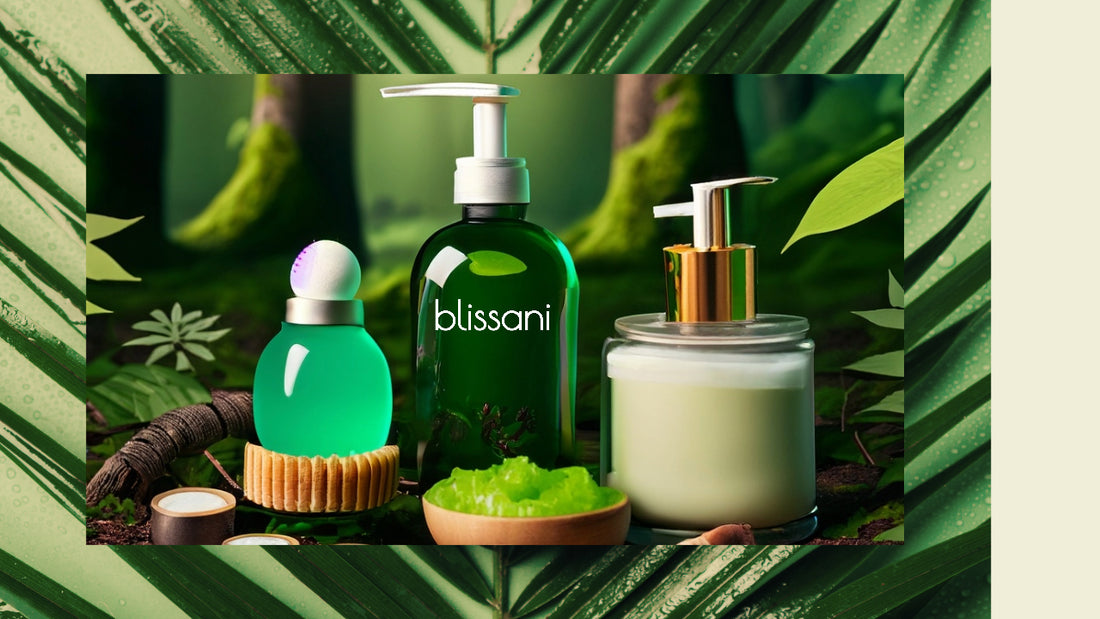
Your Ultimate Guide to the Perfect Vegan Skincare Routine
Share
What Makes a Skincare Routine Truly Vegan?
Vegan skincare means every ingredient in the formula comes from plant or synthetic sources — no beeswax, no lanolin, no collagen harvested from animal hides, no carmine (a red pigment made from crushed beetles). It also means zero animal testing at any stage of development. At blissani, we've been formulating this way for over a decade, and the honest truth is that plant-based ingredients aren't just an ethical choice — many of them outperform their animal-derived counterparts on a biochemical level.
The skin absorbs what you put on it. Choosing products with identifiable, plant-sourced ingredients gives you more control over what actually reaches your bloodstream through the skin barrier. That's a practical reason to care about ingredient sourcing, separate from any ethical stance.
Step One: Cleanse Without Stripping
A good cleanser removes sebum, pollution particles, and dead skin cells without disrupting the skin's acid mantle — the thin, slightly acidic film (pH 4.5–5.5) that protects against bacteria and environmental damage. Most conventional cleansers run alkaline, which temporarily raises skin pH and triggers rebound oil production.
When you're shopping for a vegan face wash, look for formulas built around ingredients like aloe vera (which contains polysaccharides that hydrate while cleansing), tea tree oil (a natural antimicrobial effective against Cutibacterium acnes), and chamomile extract (which contains the anti-inflammatory compound bisabolol). The blissani Clear Face Wash uses this kind of plant-forward approach — no sulfates, no animal byproducts, made in the US.
Cleanse once in the morning and once at night. Over-cleansing is a real problem: stripping your skin twice daily with a harsh formula leads to irritation and compromised barrier function, not cleaner skin.
Step Two: Toning Actually Does Something — When Done Right
Toners have a bad reputation because the original versions were mostly alcohol and astringents that dried skin out. A well-formulated vegan toner does the opposite. It rebalances pH after cleansing, delivers a fast-absorbing layer of hydration, and preps skin to absorb the serum or moisturizer that follows.
Ingredients to look for: witch hazel (a natural astringent that tightens pores without alcohol), green tea extract (rich in EGCG, a polyphenol that neutralizes free radicals), and rose water (contains phenylethanol, which has mild antibacterial properties). The blissani Clear Face Toner is formulated around these actives — it's one of the simplest, most effective steps you can add to a routine.
Apply toner with clean hands or a reusable cotton pad immediately after cleansing, while skin is still slightly damp. That timing matters — damp skin absorbs actives more efficiently than dry skin.
How to Handle Acne and Breakouts in a Vegan Routine
Acne forms when excess sebum and dead skin cells clog a follicle, creating an environment where C. acnes bacteria thrive. Most conventional spot treatments use benzoyl peroxide or salicylic acid — both effective, but often harsh enough to cause peeling and redness, especially for sensitive skin types.
Vegan alternatives with solid research behind them include tea tree oil (studies show a 5% concentration reduces acne lesions comparably to 5% benzoyl peroxide with fewer side effects), niacinamide (a form of vitamin B3 that reduces sebum production and fades post-acne hyperpigmentation), and willow bark extract (a natural source of salicin, which converts to salicylic acid on the skin).
The blissani Clear Spot Solution applies directly to active breakouts and uses this plant-based approach. Dab it on individual blemishes — don't spread it across your whole face. Spot treatments work by concentrating actives where bacteria are active, not as a general coverage product.
Anti-Aging Serums: What Vegan Formulas Can Actually Deliver
Collagen loss starts in your mid-20s at roughly 1% per year. By your 40s, the structural protein network that keeps skin firm and plump is noticeably thinner. The good news: you don't need animal-derived collagen in a topical product to address this. Collagen molecules are too large to penetrate the skin's outer layer anyway — what actually works are ingredients that stimulate your skin's own collagen synthesis.
Vitamin C (ascorbic acid) at concentrations of 10–20% is one of the most studied collagen-boosting topical ingredients available. Hyaluronic acid — which can hold up to 1,000 times its weight in water — pulls moisture into the dermis and temporarily plumps fine lines. Plant-derived retinol alternatives like bakuchiol (from the Psoralea corylifolia plant) have shown comparable results to retinol in clinical studies, with significantly less irritation.
Blissani makes two anti-aging serums worth knowing about: Gemma Crema, formulated for women's skin concerns, and Very Toney, built specifically for men's skin (which is roughly 25% thicker and produces more sebum on average). Both are vegan, US-made, and priced at $29. Using a serum before moisturizer — on damp skin — maximizes absorption of these actives.
Putting It All Together: A Routine That Actually Works
The sequence matters as much as the products. Apply skincare in order of thinnest to thickest consistency: cleanser, toner, serum, moisturizer, SPF (morning only). Skipping SPF after all of this effort is the fastest way to undo it — UV radiation is responsible for roughly 80% of visible skin aging.
A complete vegan routine doesn't require ten steps or a $300 budget. The entire blissani lineup runs five products and under $110 total. Consistency over time matters more than any individual product — skin cell turnover takes about 28 days, so give any new routine at least a month before judging results.
Start with a cleanser and SPF if you're building from scratch. Add a toner, then a serum, then a spot treatment as needed. That's it. Plants work — you just have to actually use them.
Frequently Asked Questions
Common questions about this topic
Are plant-based skincare ingredients actually as effective as animal-derived ones, or is vegan skincare just an ethical choice?
According to the article, many plant-based ingredients actually outperform their animal-derived counterparts on a biochemical level. Vegan skincare is both an ethical choice and a practical one, since plant-sourced ingredients give you more control over what reaches your skin and bloodstream.
Why do conventional cleansers make my skin oilier after washing if they're supposed to clean it?
Most conventional cleansers are alkaline, which temporarily raises your skin's pH and disrupts the acid mantle (your skin's natural protective film at pH 4.5-5.5). This pH disruption triggers rebound oil production, making your skin produce excess sebum to compensate.
What specific animal-derived ingredients should I look out for on product labels when switching to vegan skincare?
The article identifies beeswax, lanolin, collagen harvested from animal hides, and carmine (a red pigment made from crushed beetles) as common animal-derived ingredients to avoid. You should also check that products haven't been tested on animals at any stage of development.