
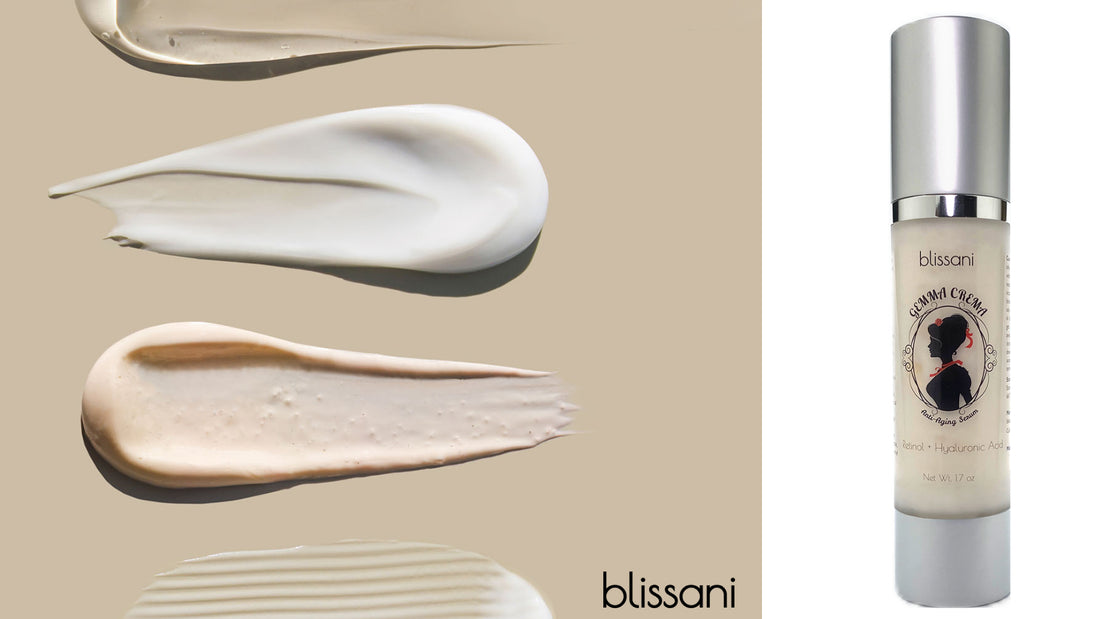
Unlock Ageless Radiance with Organic Anti-Aging Skincare
Share
What Does "Organic Anti-Aging Skincare" Actually Mean?
The phrase gets thrown around constantly, but it's worth being specific. Organic anti-aging skincare refers to formulas built around plant-derived ingredients — botanical extracts, plant oils, naturally sourced vitamins — processed without synthetic pesticides and, ideally, without harsh petrochemical additives. The goal is to support skin's natural repair processes rather than overwhelming them with aggressive synthetic compounds. That distinction matters more as skin matures, because older skin tends to be more reactive and less resilient.
At blissani, every product is vegan, cruelty-free, and made in the United States. The formulas are designed to work with skin biology, not against it — using ingredients with documented mechanisms rather than marketing buzzwords.
Why Retinol Belongs in a Natural Anti-Aging Routine
Retinol is one of the most thoroughly studied topical ingredients in dermatology. It's a form of Vitamin A that, once absorbed, converts to retinoic acid in the skin. That conversion triggers measurable changes: increased cell turnover, stimulation of collagen synthesis, and a reduction in the appearance of fine lines over consistent use. Studies have shown visible improvement in skin texture and tone with regular application over 12 weeks.
Some people assume retinol can't belong in a "natural" formula — but Vitamin A occurs naturally in plant sources and can be formulated gently enough for sensitive skin when paired with the right supporting ingredients. The key is concentration and delivery. Too high a percentage without buffering agents causes irritation; too low and you see little benefit. A balanced serum gets you results without the redness.
How Gemma Crema Combines Retinol with Botanical Support
The Gemma Crema Vegan Anti-Aging Serum is built around exactly that balance. It pairs retinol with hyaluronic acid, which draws moisture into the skin and helps maintain the hydration barrier that retinol use can sometimes compromise. Sunflower oil — high in linoleic acid — reinforces the lipid layer, reducing transepidermal water loss and keeping skin supple between applications.
Beyond those core ingredients, the formula includes 20 botanical extracts along with vitamins, amino acids, and phospholipids. Phospholipids are particularly useful in an anti-aging context: they're structural components of cell membranes, and topical application can improve skin elasticity and permeability, allowing other active ingredients to penetrate more effectively. Amino acids like arginine and glycine support collagen precursor production, giving your skin the raw material it needs to maintain firmness over time.
The result isn't a product that does one thing dramatically — it's a formula that addresses multiple aging mechanisms simultaneously: cell renewal, hydration, collagen support, and barrier repair.
What Sets Vegan Anti-Aging Serums Apart from Conventional Options
Conventional anti-aging products often rely on animal-derived ingredients — collagen from bovine sources, lanolin from sheep's wool, or squalane historically sourced from shark liver. These aren't inherently ineffective, but they come with ethical concerns and, in some cases, inconsistency in purity and sourcing.
Vegan formulas replace these with plant-based equivalents that perform comparably. Squalane derived from sugarcane or olive oil has essentially the same molecular structure and skin-compatibility as shark-sourced squalane. Plant-derived hyaluronic acid produced through fermentation is bioidentical to the kind your skin produces naturally. The science holds up — and you're not contributing to animal harm in the process.
Cruelty-free certification adds another layer: no ingredient or finished product is tested on animals at any stage. For blissani, that's a baseline, not a marketing add-on.
Building a Simple Organic Anti-Aging Routine That Actually Works
A lot of anti-aging routines are overcomplicated. More products don't automatically mean better results — and layering incompatible actives can cause irritation, pilling, or reduced efficacy. Here's a straightforward framework:
Morning: Cleanse, tone, apply a lightweight moisturizer with SPF. Sun protection is non-negotiable if anti-aging is your goal — UV exposure is responsible for the majority of visible skin aging, including hyperpigmentation, loss of elasticity, and deepened lines.
Evening: Cleanse, tone, apply your retinol serum. Nighttime is when skin cell turnover peaks naturally, so it's the most effective window for retinol application. If you're new to retinol, start with two or three nights per week and increase frequency as your skin adjusts.
Consistency matters more than complexity. A three-step routine used daily will outperform a ten-step routine used sporadically.
Is Organic Anti-Aging Skincare Right for Your Skin Type?
Plant-based formulas tend to perform well across skin types, but there are a few things worth knowing. If you have oily or acne-prone skin, look for non-comedogenic oils like sunflower or rosehip rather than heavier options like coconut oil. If your skin runs dry, prioritize formulas with hyaluronic acid and ceramide-supporting ingredients to reinforce the moisture barrier.
Sensitive skin types can generally tolerate well-formulated vegan serums better than harsh synthetic alternatives, but patch testing is always a reasonable step when adding any new active to your routine — especially one with retinol.
For men specifically, skin tends to be thicker and oilier due to higher androgen levels, which can delay some visible aging but also means different hydration and absorption needs. blissani's Very Toney serum is formulated with that physiology in mind, while Gemma Crema works well for any skin type looking for comprehensive anti-aging support.
The short version: if you want an organic anti-aging serum that works, look for one with retinol supported by hydrating and barrier-repair ingredients, skip the ones with vague botanical lists and no active concentrations listed, and use it consistently at night. The Gemma Crema Vegan Anti-Aging Serum at $29 is a practical starting point — straightforward ingredients, no animal products, and a formula designed to do real work on your skin.
Frequently Asked Questions
Common questions about this topic
If organic anti-aging skincare uses plant-derived ingredients instead of synthetics, is it actually as effective as prescription retinoids?
Organic retinol is a naturally sourced form of Vitamin A that converts to retinoic acid in your skin, triggering the same measurable benefits — increased cell turnover and collagen synthesis — as synthetic alternatives. The key difference is that natural formulas work *with* your skin biology rather than overwhelming it, which matters especially for mature, reactive skin that's less resilient.
Why is retinol specifically important to include in an organic anti-aging routine?
Retinol is one of the most thoroughly studied topical ingredients in dermatology, with documented mechanisms that reduce fine lines, stimulate collagen production, and increase cell turnover. As skin matures, it becomes more reactive, so using a naturally sourced retinol allows you to get these proven anti-aging benefits without harsh petrochemical additives that can irritate aging skin.
What's the difference between an organic anti-aging product that actually works and one that's just using "marketing buzzwords"?
Real organic anti-aging formulas use ingredients with documented mechanisms — like plant oils, botanical extracts, and naturally sourced vitamins — chosen for how they support your skin's natural repair processes. Products relying on marketing buzzwords lack this scientific foundation; look for brands that explain *why* each ingredient matters, like blissani does, rather than just listing "organic" as a selling point.